Delivery apps changed the way people order food, groceries, drugs, and other goods. Companies are putting more effort into creating new solutions due to high customer demand for convenient services. From small firms to big companies, it’s become one of the most promising types of businesses online.
So, how much does it cost to make a delivery app?
Depending on several factors, the development of a delivery app will cost between $15,000 and $300,000+. On average, an MVP app can be developed for less than $30,000, but there are complex apps that have the price tag above $250,000 like UberEats or DoorDash.
Do you plan to create your own delivery app and would like to know about reasonable prices? We prepared this guide for you! It covers all factors that affect the cost of building, hidden fees, the development process, and tips on how to minimize expenses. Let’s get to it!
What Determines the Cost of Developing a Delivery App? 10 Key Factors
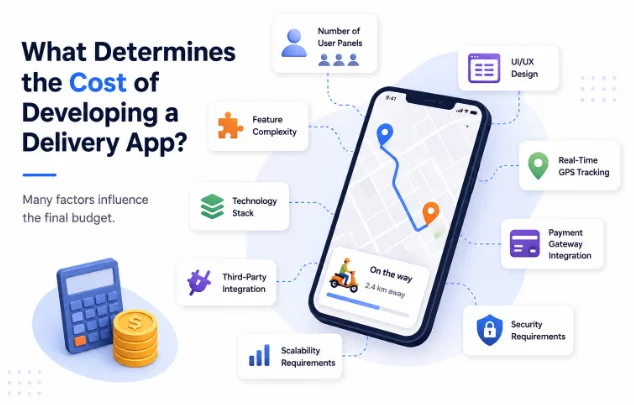
All delivery applications are unique. There are simple ones providing basic ordering, and then, there are complicated products that have various advanced features such as AI-based recommendations or route optimization.
Have you ever thought why one delivery application costs $20,000 but another costs $250,000?” Several factors influence the final budget.
1. Type of Delivery Application
Business models have an impact on the cost of development since different delivery services will require different sets of features.A basic local delivery application can range from $15,000 to $40,000. A marketplace solution with support for multiple vendors can cost anything from $80,000 to $250,000+.
Food delivery services, grocery delivery, courier services, pharmacy delivery services, and logistics platforms each have their own unique features and needs.The complexity of a project plays a major role in increasing development costs.
2. Number of User Panels
Every delivery application will involve developing more than just one user panel. In most cases, a typical project will involve developing customer apps, driver apps, merchant dashboards, and admin panels.
Every panel will require separate development, testing, and maintenance efforts. Increasing the number of panels will increase project complexity significantly. Single-user applications will cost less compared to applications that serve customers, merchants, drivers, and admin users.
3. Feature Complexity
Feature sets have one of the largest impacts on pricing. Basic ordering solutions tend to be quite inexpensive.
Advanced solutions that include real-time tracking, route optimization, artificial intelligence recommendations, loyalty programs, and other features will increase development costs substantially.
4. User Interface and Experience Design
The user experience is vital in developing a successful delivery app. Users demand seamless navigation and fast ordering procedures.
The price range for basic design is $3,000-$8,000. The interface with a thorough UX research process and many interaction opportunities could cost more than $20,000. Good design will keep customers loyal and increase conversion rate. It often pays back very well in the long run.
5. Real-Time GPS Tracking
Real-time GPS tracking is one of the most sought-after features among delivery apps. Customers seek transparency throughout their deliveries.
Such functionality requires advanced mapping technologies and infrastructure. Real-time GPS could be costly. Somewhat about $5,000 to $25,000. Accurate tracking increases client satisfaction and makes the process more efficient. This feature is quite popular now.
6. Payment Gateway Integration
Safe payment is one of the main needs of delivery applications. Companies use various payment methods to satisfy clients.
The integration of such payment gateways as Stripe, PayPal, Apple Pay, or Google Pay demands development work and testing. Integration could cost from $1,000 to $10,000.
7. Choice of the Technology Stack
Technology selection impacts both the cost of development and cost of maintenance. Modern technology stacks such as React Native, Flutter, Node.js, and cloud technologies have flexibility and scalability.
Nevertheless, sophisticated architecture needs additional costs.The proper technology stack is required to support further growth and improve application performance. Otherwise, costs will grow in the long run.
8. Third-Party Integration
Third-party integrations for maps, notifications, analysis, communication, and payments are often used by delivery apps. There is a need to integrate third-party software, configure it, and maintain it regularly. The amount of money needed depends on the level of complexity and the price of APIs.
Companies should take into account not only development but also maintenance fees. They can become significant.
9. Security Requirements
Security is a key issue in development because delivery apps store sensitive data of customers.
Encryption, authentication, anti-fraud measures, and other security elements require additional efforts. Thus, implementation of security measures costs $3,000-$20,000 and more per project.
10. Requirements for Scalability
There is a difference between apps that cater to the needs of local business and applications designed for further expansion across the country or even worldwide. Scalable infrastructure requires sophisticated architecture, cloud solutions, and performance optimization.
These factors add extra costs to the development phase. But the absence of scalability forces businesses to completely redesign their applications in the future. This way, scalability saves money in the long run.
Cost Breakdown by Delivery App Development Stages
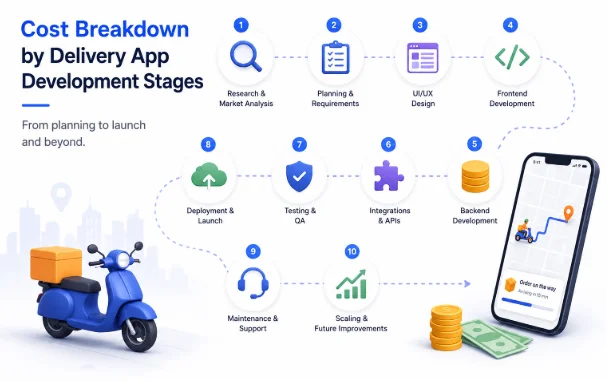
Delivery app development includes many different stages, which affect the overall budget required for creating the application.
But what is the actual cost breakdown? Knowing this information, you can have reasonable expectations and be fully aware of all the potential expenses.
1. Research and Market Analysis
Market analysis and customer research make a solid foundation for any delivery application. In order to design a truly great application, businesses need to find out about their target audience, main competitors, and possible demand in the market.
It will help to define valuable features that may attract users. It is a smart way to prevent the creation of unnecessary functionality that will never benefit its users. The total price of conducting the research is estimated at $1,000-$10,000.
Larger projects often require deeper competitor analysis and user research. Investing in research early helps businesses save money later. It creates a strong foundation for the entire development process.
2. Business Planning and Requirements Gathering
Following research is the stage of planning, which includes defining goals, functions, processes, and technological requirements for the application. A well-planned application guarantees that stakeholders and developers do not misunderstand each other.
Moreover, a good plan will help save on changing features at later stages of development. Planning normally costs from $2,000 to $8,000. In case of a complicated delivery platform, there might be additional workshops and consultations.
Requirements documented by experts help develop the application faster and achieve better results. Documentation also provides better management of costs.
3. UI/UX Design
In this stage designers build up wireframes, user flows, prototypes, and the entire visual part of the interface. Effective design increases customers’ satisfaction and ordering processes. Poor user experience might result in the abandonment of an application.
The cost of design varies between $3,000 and $20,000 depending on the number of screens and difficulty of design. Professional design of an application is an investment in the future, and not an expense.
4. Frontend Development
This stage involves everything that is visible and available to users within the application. It consists of customer apps, interfaces for drivers, merchant dashboards, and other web portals. Each of these interfaces needs extensive development.
Frontend development can cost anywhere from $5,000 to $50,000+. Additional features and screens result in higher prices. Developing an easy-to-use and responsive frontend boosts user engagement. It also contributes to creating a good brand image.
5. Backend Development
Backend development covers the processes taking place behind the scenes to run an app successfully. Backend software is responsible for databases, user accounts, orders processing, business logic, etc. It can be very complex to design.
Backend development usually ranges between $10,000 and $80,000+. Large-scale platforms require high-quality backend infrastructure. A reliable and scalable backend guarantees the success and future development of the platform.
6. Integration with APIs and Third-Party Services
Delivery applications need different third-party services. For example, they need payment gateways, GPS, message exchanges, and analytics. Integration increases app functionality but requires considerable development work. Each of these components should be configured properly.
Integration costs range from $2,000 to $15,000 per project depending on the complexity of this task. The exact amount depends on the number and complexity of integrations. Well-executed integrations improve user experience and operational efficiency. They also reduce manual work.
7. Quality Assurance and Testing
The process of testing is required to make sure that all functionality is working properly before the launch of the application. Testing reveals errors, vulnerabilities in security, and usability issues. Avoiding testing results in costly corrections after launch as well as reputational damage among customers.
The cost of quality assurance and testing is estimated to be $3,000–$15,000. In complex apps, testing is quite time-consuming because it includes thorough analysis on multiple devices. Thorough testing enhances performance and stability. Thus, end-users will have a better experience using the application.
8. Deployment and Launch
The deployment stage includes deploying and configuring production servers. Developers ensure that databases, APIs, and infrastructure are working as expected in the production environment.
The cost of deployment varies from $1,000 to $5,000 depending on the complexity of the application. In the case of an enterprise application, deployment costs more. Successful deployment ensures a smooth launch without downtime and technical problems.
9. Maintenance and Support
Software development does not finish when developers launch the application. Applications must be maintained over time for security and performance reasons. Periodic updates address errors in code, improve performance, and add new features.
Also, customer requirements and preferences change with time. Annual maintenance costs usually represent 15%–25% of the original development budget. For a $50,000 app, maintenance may cost $7,500–$12,500 annually. Consistent maintenance extends application lifespan. It also helps businesses stay competitive.
10. Scaling and Future Improvements
As companies grow, they will have to introduce new functionalities to improve the apps. Improvements could relate to AI capabilities, multi-region options, analytics, or integration possibilities.
Scalability prices can greatly differ and cost up to $5,000 – $100,000 and more depending on the needs. Proper planning when scaling will minimize any further spending. This will ensure sustainable development of your business.
Existing Relevant Contents:
How Much Does It Cost to Develop a Mobile Game?
How Much Does It Cost To Develop An Educational App?
How Much Does It Cost To Develop An E-Wallet App?
How Much Does It Cost To Develop A Fitness App?
10 Must-Have Delivery App Features and Their Estimated Costs
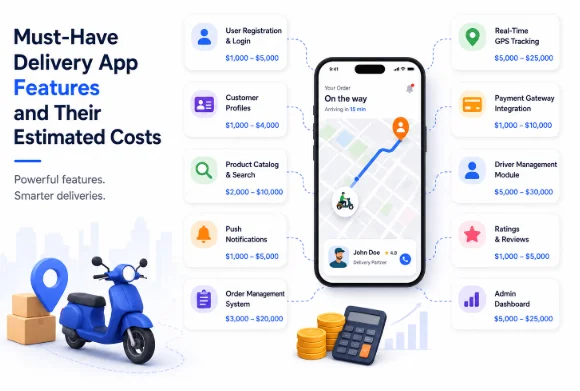
One of the main factors that affect the price of delivery app development is their functionality. When adding new features, the budget needed grows. Have you ever asked yourself, “What should I pay attention to when selecting delivery app features?” Here are some must-have delivery app functionalities.
1. User Registration and Login
For secure entry into an account, users can use either email or telephone number, or even use third-party services such as social media. Such features will make customer experience personalized and user management convenient.
Prices for such feature development generally amount to between $1,000 and $5,000. User registration ensures safety and is the cornerstone of all app features.
2. Customer Profiles
Through customer profiles, you can control addresses, payment methods, and order history. Customer profiles make your return purchases more convenient for customers.
Development normally takes $1,000 to $4,000. Advanced functionalities will cost more. Customized profiles lead to better retention and increased customer satisfaction.
3. Product Catalog and Search
You must ensure that customers can easily browse your products. Search capability makes sure that your clients will not have any trouble finding their products.
Search capability is normally priced at $2,000 to $10,000 depending on catalog size and filters. Organizing your products into an organized catalog will lead to better conversions and lower abandonment rate.
4. Real-Time GPS Tracking
GPS live tracking is one of the topmost app features today. The ability to monitor your delivery process builds trust in your customers. It normally costs developers $5,000 to $25,000 to include this feature. This function will also reduce your customer support burden.
5. Push Notifications
Push notifications notify the client about the delivery process, offers, promotions, and other news. Notifications will increase engagement and help to sell more products.
Developers charge clients with $1,000 to $5,000 for implementing this functionality. Push notifications are excellent tools for marketing campaigns and client retention.
6. Payment Gateway Integration
Payment gateway integration is important to ensure various payment options in delivery applications. Card payment options, digital wallets, and online bank payments are popular among businesses.
The price range for payment gateway integration lies from $1,000 to $10,000. Improved security leads to better user experience.
7. Order Management System
Order management is essential to process and deliver customers’ orders efficiently. The order management system is the heart of each delivery application. The price range for developing such a system is $3,000 to $20,000.
8. Driver Management Module
A driver management module is an essential part of the application for drivers. Driver tracking, status update, and navigation functions are important to businesses. Driver management module development prices are $5,000 to $30,000.
9. Ratings and Reviews
Ratings are used by customers when selecting certain providers and products. Reviews help users trust delivery apps more and understand their products better. The price range for developing a rating system is $1,000 to $5,000. Review systems encourage accountability and improve service quality.
10. Admin Dashboard
An administrator requires full control over users, vendors, orders, analytics, and business processes. The admin dashboard gives useful information that will help with decision-making. Development costs can vary between $5,000 to $25,000. A good dashboard can ensure effective business growth.
Delivery App Development Costs in Different Industries
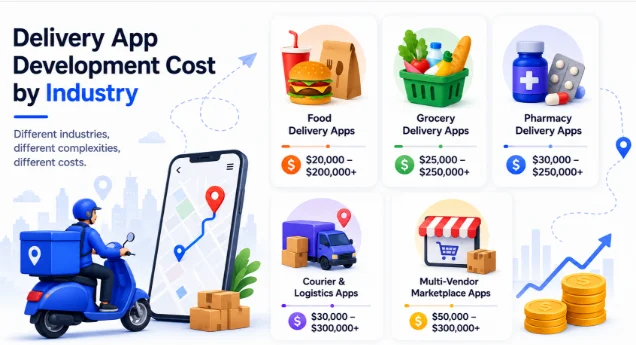
Not all delivery apps are alike and therefore require different complexities of development. It greatly affects their development cost.
Are you wondering, “How much does it cost to develop a delivery app according to the industry?” Here are the most popular types.
- Food Delivery Apps: Uber Eats and DoorDash are popular examples of such software. The cost of developing food delivery applications varies between $20,000 to $200,000+. This type requires restaurant management, order handling, payments, and delivery.
- Grocery Delivery Apps: A grocery delivery app manages a large amount of stock and inventory. Their average development costs can vary between $25,000 to $250,000+. The complexity of the inventory system increases development costs.
- Pharmacy Delivery Apps: Pharmacy delivery app implies adding more regulatory and security measures. The cost of creating such an app is between $30,000 to $250,000+. The delivery app of this kind needs prescription management and handling sensitive user data.
- Courier and Logistics Apps: Courier applications concentrate on the aspects such as routing, fleet management, and real-time tracking. Development prices tend to be between $30,000 to $300,000 and more. The business needs route optimization and integrations.
- Multi-Vendor Marketplace Delivery Apps: Multi-vendor applications involve working with numerous vendors by means of one program. The prices of developing an application may vary between $50,000 to $300,000 and more. Working with vendors, commissions, payouts, inventories entails additional effort.
Hidden Costs Many Businesses Overlook
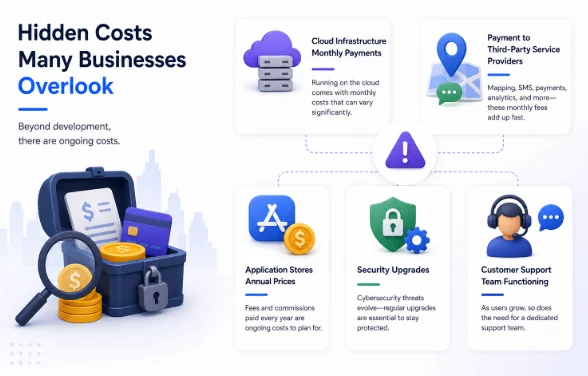
Some businesses tend to concentrate on developing prices but disregard other expenses.
Have you ever been asking yourself, “Why does it happen that some delivery app projects go beyond the initial budget”? Undervalued expenses might be the answer.
- Cloud Infrastructure Monthly Payments: Running on the cloud implies paying monthly. Prices may vary between $50 to $5,000 per month.
- Payment to Third-Party Service Providers: There are various services such as mapping, SMS, payments, analytics, etc. They require monthly fee payments. Such costs can sum up quickly.
- Application Stores Annual Prices: App store charges imply not only fees but also the structure of commissions paid every year. Businesses should account for these ongoing costs.
- Security Upgrades: The landscape of cybersecurity is always evolving. Upgrades and improvements in terms of security are necessary for both protection of clients and businesses.
- Customer Support Team Functioning: As the number of users grows, a business needs to hire a dedicated support team. Support costs become a considerable part of the company’s operational costs.
10 Factors That Increase Delivery App Development Costs
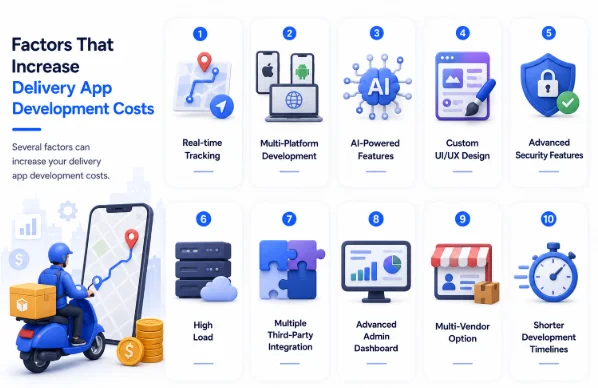
Initially, every company tends to have a rather rough estimation of the delivery app cost.
Have you ever thought about, “Why does delivery app development turn out to be more expensive than expected?” Here are the most typical answers to this question.
1. Real-time Tracking
The ability to track deliveries in real-time has become essential for modern delivery services. The customer should be able to see his order on the map at any moment in time. Implementing real-time tracking requires GPS, map services, route building software, and a synchronization mechanism.
These may result in extra costs ranging between $5,000-$25,000. This feature also requires extra server capacity, and the more orders that are to be delivered, the higher these operational costs.
2. Multi-Platform Development
Multiple platforms like Android, iOS, and web apps are needed for most companies. Naturally, developing apps for different platforms leads to higher labor costs.The time required for developing distinct interfaces, testing apps, and optimizing performance increases considerably.
This increases total costs from 30% to 60% when compared to building a single platform app.
There are solutions such as cross-platform technologies. In some cases, though, customized solutions need platform-specific development.
3. AI-Powered Features
Applications built around artificial intelligence have become more common for logistics apps. Some useful features of that kind include route optimization, forecasting, and customer recommendations. But implementing AI solutions means extra expenses associated with development, training, and testing.
AI-based features can cost anywhere between $10,000 and $100,000 or even more. Furthermore, advanced AI models usually require cloud architecture. Cloud-based solutions need to be managed even after their implementation. Despite being expensive, AI provides many benefits for the business.
4. Custom UI/UX Design
Creating a distinctive design makes the business more appealing to users than its rivals. A personalized user experience makes a difference to branding efforts. Nevertheless, custom interface design requires extra research and design efforts.
Such a design may cost between $5,000 and $20,000 or more. Moreover, advanced animations and high levels of interactivity also lead to higher costs. Companies aiming for high-end clientele can benefit from such design investment.
5. Advanced Security Features
Delivery apps deal with customer information, addresses, and payments. Thus, advanced security features become extremely important. Such things as encryption algorithms, fraud detection, and other security features will cost an extra $5,000 up to $30,000+.
If the field where you operate is regulated, then security features might cost even more. This is especially true for healthcare delivery companies. Advanced security features minimize risks and protect not only businesses but also customers as well.
6. High Load
For applications that are expected to be used by thousands of people simultaneously, a special infrastructure. There are many advanced database architectures, systems of cache, load-balancing, and many other elements involved in building a robust infrastructure.
All of these make development extremely complicated. Considering large-scale use cases adds an additional $10,000 up to $50,000+ to the price.
7. Multiple Third-Party Integration
Modern delivery applications are not isolated and use numerous third-party services: payment services, GPS providers, CRM platforms, analytics solutions, etc.
Integration with each external system involves development efforts. This increases the cost of software development by $500 up to $5,000. The higher number of external services, the more difficult the development process becomes.
8. Advanced Admin Dashboard
Many businesses underestimate the importance of administration systems. Modern advanced dashboards with analytics, reporting features, and control functions take much effort to develop.
An advanced admin panel may cost a business between $5,000 and $30,000+ extra. The benefit from an efficient admin panel is higher efficiency and business growth in the long run.
9. Multi-Vendor Option
Many of the most efficient delivery platforms have a multi-vendor option. Such a platform needs an advanced administration system with merchant management features.
It usually takes an extra $15,000-$80,000 to develop the multi-vendor feature. However, such an option allows businesses to generate more money with time.
10. Shorter Development Timelines
In some cases, businesses want to launch their products faster. In this case, businesses need more developers and designers to be involved in the work. It may increase the total price of a custom platform up to 50%. However, businesses may get new opportunities with accelerated delivery.
9 Common Mistakes That Make Delivery App Development Costly
Most businesses end up spending more by making bad decisions and planning. Here are some things that will help you save a lot of money while developing a delivery app.
- The more features there are initially, the higher the risks of exceeding the deadline and budget. Focus on basic functions first.
- Low prices usually correlate with low quality. Paying extra to fix errors will take up much time and cost money.
- If it is hard to scale your application further, you’ll have to redesign it to accommodate additional users. It’s not cheap.
- Confusing and incomplete documentation will cause miscommunication, thus increasing the amount of necessary revisions.
- Good apps always have good UX. Otherwise, the app’s usage rates will drop sharply after the launch.
- There may be hidden bugs in your application if you omit testing. Fixing them after the launch takes much effort.
- Every app requires regular updates and upgrades. Thus, you’ll lose time and resources if you neglect maintenance.
- Using the wrong technologies can create performance and scalability issues. The right tech stack supports future growth.
- Poor communication often causes delays and misunderstandings. Clear collaboration helps projects run more smoothly.
10 Ways to Lower App Development Expenses for Delivering Goods and Services
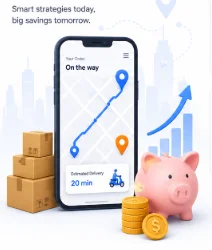
Development savings do not mean poor quality. Ever asked yourself, “What should I consider to create an app cheaply?” The following tips might be helpful.
- Develop an MVP with just core features, which is capable of reducing the cost of development by up to 60% and speeding up the time-to-market. In addition, it helps validate the idea of the project in advance and save on resources.
- Limit the development of core features in the product’s first version and add other features according to customer requests.
- Developing a cross-platform app reduces the expenses of up to 20%–40% as the same codebase fits both operating systems.
- Implement third-party integrations like payment gateway or mapping features to save on development time.
- Outsourcing development to professionals reduces development expenses by 40%–60% but the choice of the team plays a crucial role.
- Effective project planning helps to avoid any misunderstandings, mistakes, and reworks during development. It allows managing the budget in advance.
- The agile approach allows implementing different features of the app gradually. Besides, this approach is helpful for spotting problems.
- Testing helps to identify issues early to prevent further spending to fix the problem at the last stages.
- Scalable technologies are good to ensure that there will be no additional expenses to change the existing codebase when the app scales up.
- Working with experienced professionals reduces development risks and mistakes. Their expertise often saves more money in the long run despite higher initial rates.
How App-Concept Can Help You to Create a Delivery App
Looking to build a delivery app tailored to your business model? Team App-Concept can help you validate your idea, create an MVP, design intuitive user experiences, and launch a scalable delivery platform that grows with your business.
The company’s developers are known for their ability to create efficient and user-friendly apps. It helps businesses successfully compete in today’s fast-growing markets, such as food delivery, grocery delivery, logistics, and couriers.
When choosing App-Concept, businesses will get access to such benefits as:
- Delivery application development
- Cross-platform and native mobile application development
- Designing of intuitive and beautiful UI/UX
- Development of high-performing back-end infrastructure
- Incorporation of real-time GPS tracking systems
- Testing and quality assurance of the application
- Support and maintenance services
- Development of AI-powered features
So what are you waiting for? Contact App-Concept Now!
Frequently Asked Questions
How long does it take to develop a delivery app?
Developing a basic delivery app can take 3 to 6 months. Advanced delivery apps with real-time tracking, artificial intelligence, and multi-vendor capabilities can take 6 to 12 months or even more.
Which type of development is better, native or cross-platform delivery app development?
Cross-platform app development tends to be less expensive and quicker. Native development might offer slightly better performance in case of very complex apps.
Can I develop an MVP and then gradually add all required features?
Yes. Many famous delivery companies launched with MVPs in order to prove their business model and further enhance their apps.
What is the most expensive component in a delivery app?
Features that require real-time tracking, artificial intelligence capabilities, and multi-vendor capabilities can be the most costly.
How much will my delivery app cost me each year?
On average, it costs between 15% and 25% of the original development fee to maintain, update, and secure your delivery app.
Does AI affect delivery app performance?
Yes, artificial intelligence can significantly improve your delivery app by optimizing deliveries and automating many processes.
Wrapping Up
Now you know that the cost to develop a delivery app typically ranges from $15,000 to $300,000+. It mainly depends on the app’s features, complexity, business model, and scalability requirements.
While costs can vary significantly, careful planning, prioritizing essential features, and choosing the right development partner can help you stay within budget and achieve better results.
So hopefully, with the right strategy and development team, your app can deliver value to customers while supporting your long-term business objectives.