Over the last decade, the world of online learning has gone through a massive shift as people started relying more and more on apps like Duolingo or Quizlet. However, what these users are unaware of is the investment that goes into bringing such apps to life.
This brings us to the question, how much does it cost to develop an educational app?
There is no one specific cost to develop an educational app. The overall cost is dependent on many factors. However, simply based on app complexity, the development cost starts with $5,000, and the prices can jump to almost over $400,000 as the app becomes more complex and feature-rich.
Stay tuned as we tell you all about educational app development costs. Also, we will give a rough estimate of the different types of educational app development cost. So, let’s get right into it!
How Much Does It Cost To Develop An Educational App? – Based On App Complexity
Learning is no longer limited to textbooks in today’s world. Students across the globe have now adapted to educational apps for a more efficient learning process.
But what these curious learners or even educators barely really know about is the cost to develop these very apps that help them learn. So, how much does it cost to develop an educational app?
| App Complexity | Cost | Development Timeline |
| Basic | $5,000 to $60,000 | 2-4 Months |
| Mid-level | $60,000 – $200,000 | 4-10 Months |
| Advanced | $200,000 to $400,000+ | 1-2 Years |
Educational apps development cost varies significantly depending on numerous factors. However, it is possible to get an estimated range based on the complexity levels of educational apps.
Basic Educational App
A basic educational app or a Minimum Viable Product ( MVP) usually ranges from $5,000 to $60,000. These apps just contain the core features with limited design capabilities. And, more often than not, they are just made for a single platform.
Mid-Level Educational Apps
For educational apps with moderate complexity, the average budget can be $60,000 – $200,000. These are basically commercial educational apps that require a more robust backend infrastructure.
Such apps have cross-platform support and can have multiple integrations. Moreover, they offer interactive dashboards and in-app messaging for seamless teacher-student interactions.
Advanced Educational Apps
Educational apps with high complexity will cost you anywhere between $200,000 to $400,000+. Such apps are used at an enterprise level and are designed for high scalability and advanced personalization.
Simply put, these apps are full-scale Learning Management Systems (LMS). Hence, they are developed with advanced functionalities that allow in-depth analytics, real-time interactions, etc.
Different Types Of Educational Apps And Their Average Cost

We now have a wide array of educational apps, each with its own specific price. So, estimating the cost of app development becomes much easier when you know the type of educational app you want.
Of course, the ultimate cost will be dependent on many other factors. However, identifying the app type and evaluating the cost accordingly is a solid start.
So, here are different types of educational apps and their average cost.
1. Study And Revision Apps
Students nowadays rely on apps like Anki or Quizlet for last-minute revision or cramming. Some very useful features in such apps are mock tests, flashcards, scheduling integrations, etc.
The cost to develop such study and revision apps is $30,000 to $100,000+.
2. Language Learning Apps
Next, we have language learning apps like Duolingo. These apps have a combination of very minimalistic features as well as highly advanced AI-based ones.
This includes simple progress tracking, flashcards, leaderboards, real-time speech recognition, and even AI chatbots. The cost really jumps up as you add more complicated features.
So, the average cost to build language learning apps is $40,000 – $110,000.
3. Live Learning And Tutoring Apps
Live learning and tutoring apps are a bit more advanced than a typical collaboration platform. The complexity in such apps is brought by synchronous communication and marketplace management.
Beyond that, such apps also require dual-user roles, scheduling modules, virtual whiteboards, and secure payment escrow systems. Hence, they can cost anywhere between $70,000 – $150,000, depending on specific features and scaling capabilities.
4. Learning Management Systems
Learning Management Systems (LMS) are the most common educational apps, especially at a higher academic level. LMS apps are built with a multi-tenant architecture to help departments coexist with proper structure.
Moreover, they require deep analytics, robust security, and integration with existing tools. Altogether, these apps can be quite expensive, with the average budget being $90,000 – $250,000+.
5. Immersive Learning Apps
Lastly, immersive apps are slowly making their way into the world of educational apps. However, they can be very costly due to their specialized features and optimization capabilities.
These apps typically offer AR modules and even simulations that are consistently used in medical training. Such apps have a range of $100,000 – $300,000+.
Existing Relevant Contents:
How Much Does It Cost To Develop A Fitness App?
How long does it take to develop a mobile app?
5 Key Factors That Affect The Cost To Develop An Educational App
The price range we told you about thus far was either based on app complexity or app type. However, you must realise educational app development costs vary significantly based on many other factors too.
So, to help you better understand the overall cost to develop an educational app, we will now discuss those factors.
1. Platform Choice
A strong app development process is dependent on the platform you’re launching the app on. And, needless to say, whichever platform you decide on will have an impact on the overall development cost.
Native-platform development for a single platform is quick and easy, and it is much more affordable. However, choosing between iOS and Android isn’t wise if you want to connect to a broad user base.
Ultimately, people are forced to resort to native development for both Android and iOS individually. This increases the cost significantly.
The most efficient yet affordable choice is cross-platform development. It allows developers to use one code base for multiple platforms, reducing development hours. While this reduces the cost by a lot, it also means compromising on device-specific features.
2. Backend Infrastructure
Backend infrastructure, which is the server-side of an app, is a major contributing factor in developing an educational app.
The backend builds the core of an app. The more complicated an app is, the more development expertise is required to work on the backend. Hence, the development cost jumps significantly.
From setting up complex data structures to managing growing traffic spikes and ensuring scalability, all is taken care of during the backend development.
Another key aspect of this part of the development is fulfilling high-security needs for sensitive data. This can be very time-consuming and resource-intensive, which further increases the overall cost.
3. UI/UX Design
The UI/UX, which is the front-end of an app, can shift the development cost depending on your unique requirements.
The UI/UX of your app will determine how the user engages with your app. It involves creating smooth visuals, maintaining proper layouts, and most importantly, ensuring an overall intuitive user-friendly app.
While templates are readily available and affordable, they won’t give your app the premium quality you’re looking for.
However, high-quality UI/UX, which involves custom layouts and detailed animations, will increase the cost.
They require consistent prototyping, wireframing, and ultimately iterations. And, the developers and designers need to collaborate more frequently. Thus, extending the development hours and cost.
4. Third-Party Integration
An educational app will require many different third-party integrations. This is something you must take into account while estimating the development cost.
The additional cost for any third-party service is dependent on the setup, real-time sync requirements, and maintenance. Moreover, the more APIs you integrate, the higher the cost increases.
5. Development Team
Lastly, the development team is yet another common contributing factor. For enterprise-level apps with every specific requirements, an in-house development team is always a good idea. However, that also means a significant rise in the cost due to exclusive service and expertise.
Outsourcing from regions with lower hourly rates is always a wise option for those with a limited budget. However, this can increase the risk of communication overhead if the developer team isn’t consistent on their side.
Common Trends In Educational Apps And How They Affect Development Cost
Educational apps are no longer just about content delivery. As we progress into this world, educational apps are being altered to be more efficient and interactive.
What shapes this alteration in the apps is some very common trends. Let’s take a look at those trends and how they affect the cost.
AI-Powered Personalization And Tutoring
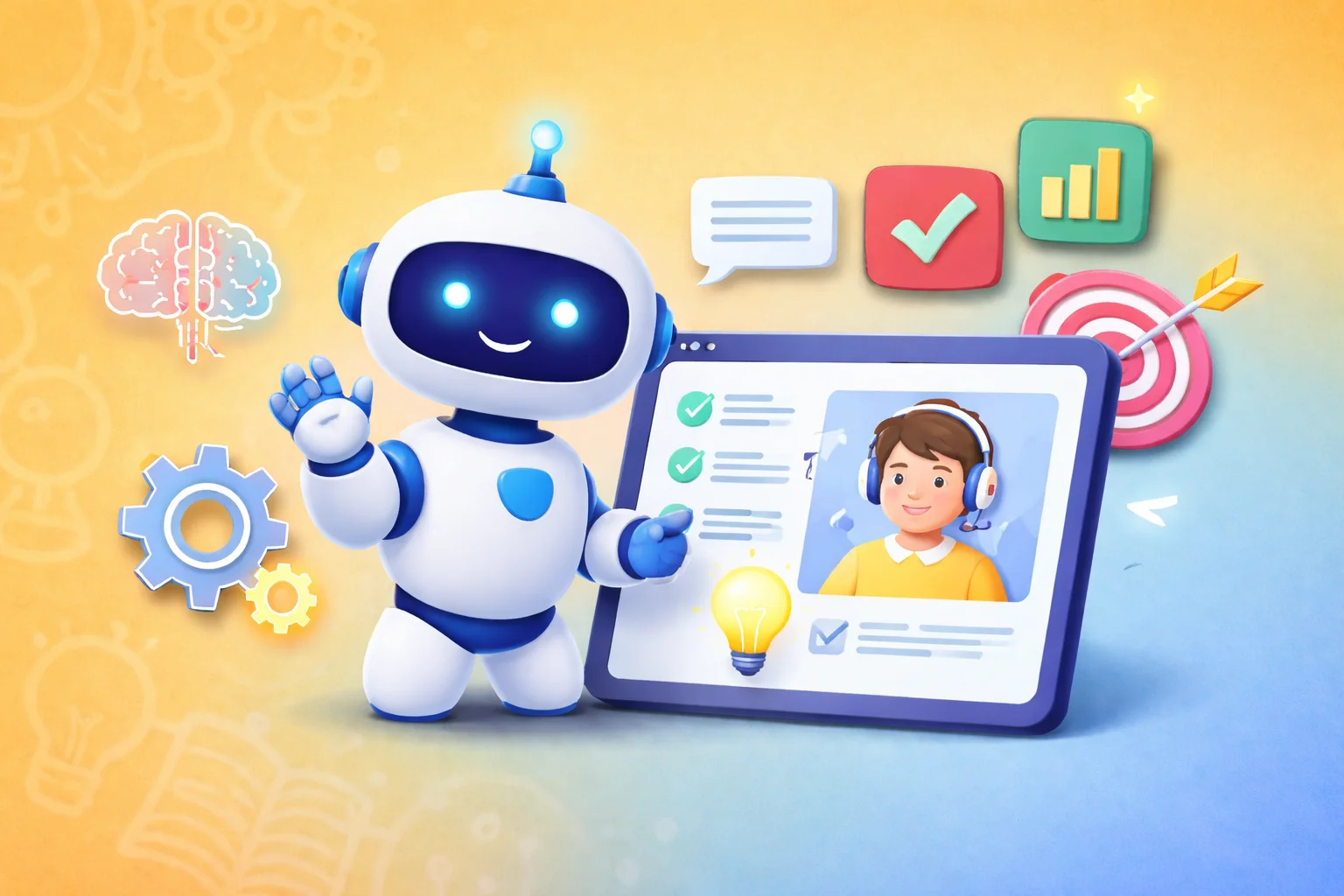
Just like many other apps, AI is also becoming a significant part of educational apps. Instead of making the apps a one-for-all solution, AI-driven strategies help provide customized learning pathways.
So, the content can be adjusted according to different requirements. Thus, catering to each user in their preferred way and making them feel valued.
Needless to say, integrating AI-based services comes at a cost. For AI models, the development cost might require an additional $10,000 – $50,000.
Gamification

Educational apps are now being made more engaging with various gaming elements. Streak-tracking, leaderboards, reward systems, and narrative-based challenges are all modern gaming elements added to maintain user retention.
The additional cost for these features depends on how much they complicate the backend process. Generally, systems that require real-time synchronization, such as streak-tracking, add $5,000 to $12,000 to the development phase.
Immersive Learning (AR/VR)

Augmented Reality (AR) and Virtual Reality (VR) are a great addition to modern education apps. They are now being used for visualizing complex concepts and gaining hands-on training, especially in the STEM field.
However, since AR integrations require high-quality 3D modeling and animation, the development cost becomes much higher. A mid-tier AR experience can add between $50,000 and $120,000 to the overall development cost.
Partner With App-Concept For Innovative Educational Apps
Educational app development no longer has to be complicated. With App-Concept, you can now get out-of-the-box educational apps for all kinds of businesses, from start-ups and mid-level enterprises to large corporations!
It is a leading app development agency that focuses on a client-first approach. Having gained years of industry experience, App-Concept can provide clients with comprehensive development solutions by blending AI and human intelligence.
Take a deeper look at all the services you will receive from App-Concept. This will help you understand why App-Concept is a top choice for many, and it should be the same for you, too!
-
- Strategic Planning: Each project has a well-thought-out approach that begins with strong research.
- User-First Design: All apps are intentionally designed to be user-friendly and intuitive, providing clients with high user engagement and retention.
- Robust Technical Knowledge: The team consists of highly qualified developers who are skilled in different industries to ensure diverse, high-performing apps.
- Agile Workflow: An iterative project management approach that helps make quick improvements based on authentic feedback.
- Reliable Project Management: The team maintains consistent communication, directly updating the clients at every stage while maintaining an organized workflow.
- Long-Term Support: The services are extended till after the development phase and app launch, offering continuous updates and maintenance.
- Proven Portfolio: App-Concept has a strong portfolio showcasing all the modern, high-functioning apps they’ve created over the years. Take a look at SAJOKI and the C-AR App, an outstanding example of what the team at App-Concept is capable of.
So, what are you waiting for? Contact App-Concept today to turn your educational app idea into the next big project!
FAQ
Q. How long does it take to develop an education app?
Typically, a simple MVP requires 2-5 months, and around a year for a mid-level education app. However, developing a large-scale, feature-rich educational app will take much longer than a year.
Q. How much does it cost to scale an educational app after launch?
The cost to scale an app depends on the user growth and increasing traffic. Generally, 15-20% of the initial budget is allocated for scaling annually.
Q. What features should a modern learning app include?
Some essential features that should be included in modern learning apps are real-time analytics, AI-based personalization, gamification, and immersive features.
Conclusion
We hope you’ve now understood how much it costs to develop an educational app. You need to remember that when it comes to app development cost, there is no one-size-fits-all solution!
Educational app development cost depends on numerous factors like app complexity, backend infrastructure, design capabilities, and more.
Ultimately, if you truly want a cost-effective yet result-driven development process, you must prioritize partnering with a high-performing development team.
And, if you have any other confusion, we recommend taking a second look at our blog that answers all kinds of questions. Good luck!