Dating apps, when built and used correctly, can lead to the beginning of a meaningful interpersonal relationship. Many of us are well accustomed to using such apps; however, building the tech that brings those matches together is a whole different challenge.
So, today we are going to explore how to develop a dating app.
Begin with proper planning of the features, target audience, and market research. Once you’ve defined the essentials, design the UI/UX, develop the product as an MVP with the right security measures, and then scale the app as your user base grows!
Stay tuned as we reveal all about dating app development. Additionally, we will provide you with the right monetization strategies. SO, let’s get right into it!
Understanding The Major Types Of Dating Apps

Before we can actually get into the dating app development process, you need to understand the different types of dating apps out there. Knowing what kind of dating app you want to build will help create a structured and simplified development plan.
So, here are 5 common types of dating apps.
1. Geolocation-Based Dating Apps
These types of dating apps connect users within close proximity by using GPS and location. As you might already know, users have to set a preferred search radius, and the app uses geospatial data to display potential matches nearby.
2. Algorithm-Based Matching Apps
Another category of dating apps is the ones that rely on specific algorithms to match users. To be more specific, these apps use matching algorithms to analyze users’ profiles, preferences, interests, and in-app behavior to recommend compatible potential matches.
3. Personality And Compatibility-Based Dating Apps
These platforms prioritize very personalized compatibility, rather than simple profile browsing. Users may have to take personality tests, questionnaires, or compatibility assessments, which will then be analyzed to identify compatible partners.
4. Interest Or Niche-Based Dating App
Instead of targeting users across a wide population, niche dating apps try to match people within a more targeted community. They are designed around a specific interest, lifestyle, profession, or demographic.
5. AI-Powered Dating Apps
This type of dating app integrates Artificial Intelligence (AI) to enhance the overall experience. AI could be used for a wide range of tasks such as matchmaking, profile recommendations, conversation assistance, image analysis, or suspicious-user detection.
How To Develop A Dating App? – 8 Development Stages
Let’s now dive into the topic you’ve been waiting for, developing dating apps.
There are multiple technical and budgetary considerations that go into creating a dating app. However, we have simplified the whole process into 8 steps.
Simply follow the steps below to bring your dating app idea to life!
1. Define The Dating App Idea
The first step in developing an app is outlining the app idea with all the correct details. You have to decide all the key aspects, such as what type of dating app it will be, who the target audience is, and what the app’s core features and functionality are.
Moreover, try to determine the app’s unique value proposition, the budget you can afford, and the kind of monetization strategies you want to invest in.
2. Conduct Market and Competitor Research
Next, you have to research the current conditions of the dating app market. Look into the latest trends, technology, pricing, target audiences, features, and user experience.
Needless to say, this also means you have to look into your competitors. Try to identify what they’re lacking and how you can offer better services compared to them.
This research will also help prioritize the features needed for your MVP.
3. Plan the Features And Technology Stack
Next, define the essential dating app features for the first version, such as registration, user profiles, search and filters, location-based discovery, matchmaking, messaging, notifications, and user reporting.
Once you decide to expand beyond an MVP, you can consider adding more personalized features. However, once you’ve chosen the initial features, select the a dating app tech
stack based on your requirements.
Firstly, you have to decide between cross-platform and native development approaches.
If you’re considering cross-platform, you may consider Flutter or React Native, Node.js or Python for the backend, and PostgreSQL or MongoDB for data storage.
However, if you want the app to be specifically designed for iOS or Android, you have to choose their respective native tech stack.
Existing Relevant Content:
How do I choose between native and cross-platform development? – Complete guide
4. Design the UI/UX And App Architecture
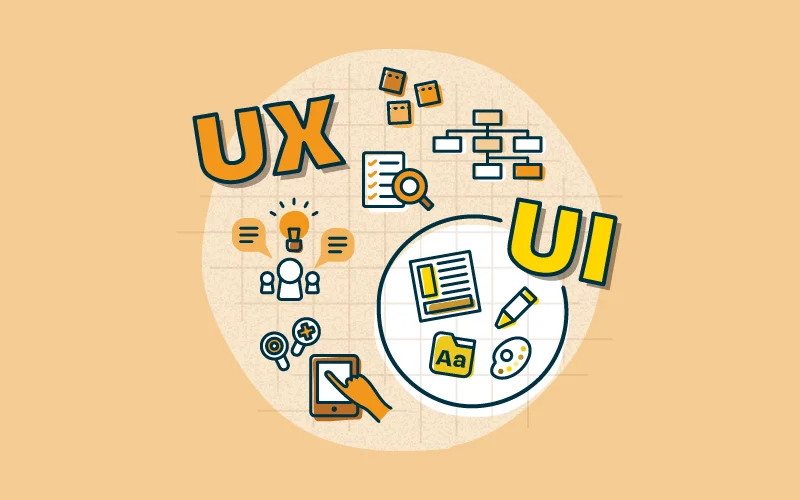
Now, move on to designing the UI/UX of your dating app. Begin by creating wireframes and prototypes for the major user journeys. Start from registration and profile creation to discovering matches and starting conversations.
At the same time, try to plan out the app’s technical layout. Design the backend architecture, database structure, APIs, and data flow required to support these interactions
5. Develop the Core Dating Features
At this stage, start developing the app with the core features in mind. Build the frontend and backend and integrate the application’s core functionality.
This typically includes user authentication, profiles, preferences, geolocation, search, matchmaking algorithms, likes/swipes, and real-time messaging.
If you’re planning to opt for a more advanced app, consider incorporating AI-powered recommendations or compatibility scoring.
6. Implement Security And User Safety

When developing dating apps, you have to be extra careful about the security implementations. These apps handle sensitive personal information, photos, conversations, and potentially location data, which makes security essential,
So, try to implement secure authentication, data encryption, privacy controls, and profile verification. Moreover, add reporting and blocking, and content moderation capabilities to provide users with stronger control over the app.
Furthermore, consider adding mechanisms for detecting spam, fake accounts, and suspicious behavior. These mechanisms will help filter out malicious or hostile intentions.
7. Test And Launch the App
Before you can launch the dating app, you can carry out a series of tests to ensure proper performance, functionality, and, of course, security.
So, start with performance tests, usability tests, security tests, and move your way towards compatibility testing across supported devices and operating systems.
And then, fix critical issues before releasing the app through relevant app stores.
8. Monitor, Update, And Scale
Once the app has been launched successfully, you have to monitor its performance and usability. To do so, you can adhere to some key metrics such as user retention, match rates, conversations, engagement, and subscription conversions.
Then, use this data and user feedback to improve the matching algorithm, UX, and features.
Moreover, as your user base grows, you have to optimize the database and cloud infrastructure accordingly. You may also have to introduce more advanced capabilities such as AI matchmaking, video dating, and personalized recommendations to boost user engagement.
Existing Relevant Contents:
How to Develop a Social Media App?
How To Develop An Educational App?
5 Dating App Development Risks (How To Minimize Them)
When developing a dating app, you will face various technical and product-related challenges. This is mostly because these apps handle very sensitive data. However, there are some technical concerns too.
So, now we are going to address some of the risks associated with dating app development and how you can reduce them.
1. Data Privacy And Security Risks
As mentioned already, these apps collect highly sensitive and personalized information about the users. Poor security can lead to data breaches, causing an unanticipated threat to users.
Moreover, anything like this will obviously ruin your dating app’s reputation.
How To Overcome Security Issues?
Make sure there is no compromise on the app’s security implementations. Try to invest in end-to-end security practices such as encrypted data transmission, secure authentication, protected APIs, and access control.
Moreover, don’t just stop after the initial security implementations. Go for regular security testing. Also, try to have privacy-focused data collection policies that store only necessary user information.
2. User Safety And Harassment Issues
Despite all the aforementioned security measures, users still sometimes experience inappropriate messages, harassment, stalking, or fraudulent behavior.
To tackle this, you will need additional safety measures.
How To Reduce User Harassment Issues on Dating Apps?
To begin with, establish strong community guidelines for the users. Then, add the block and report feature so that users themselves can control who to filter out of their platform.
Furthermore, moderate harmful content and develop systems that identify repeated abusive or suspicious behavior.
3. Location Privacy Issues
A major issue with geo-location-based dating apps is that they might accidentally expose explicit details regarding a user’s location. This could be a serious breach of privacy.
How To Prevent Location Privacy Issues in a dating app?
During the development process, make sure the app isn’t showing precise coordinates. Instead, show approximate distances or general locations and give users full control over location permissions and visibility.
4. Scalability And Performance Problems
With a growing user base, your app has to handle increasing numbers of profile searches, location queries, messages, media uploads, and matchmaking requests.
However, a poor app infrastructure will prevent you from scaling the app with proper measures. Thus, causing the app to crash and fail to accommodate a larger user count.
How To Prevent Scalability Issues?
From the beginning, build the backend using scalable cloud infrastructure. Make sure to optimize database queries and implement caching and load balancing.
Moreover, continuously monitor application performance and identify bottlenecks before they affect your users.
5. Poor Matching Quality
All dating apps’ success is measured by the accuracy and relevance with which they are pairing up the users. So, if users constantly receive incompatible or irrelevant profiles, the app’s engagement and retention will definitely decrease.
How To Avoid Poor Matching Quality on mobile dating applications?
Start with a solid matching logic based on key factors such as preferences, interests, location, and relationship goals.
Then, as the app gathers more interaction data, continuously modify the recommendation algorithm for better accuracy. You can consider looking into user feedback and engagement analytics to improve the algorithms.
Dating App Monetization Strategies
We have covered all the technical aspects of developing a dating app. However, app development isn’t simply limited to the eight steps we mentioned before.
You have to go beyond that and look into different monetization strategies to ensure the right revenue and long-term success. Hence, we’ve got you covered in this case too!
Here are some common monetization strategies that you should consider during dating app development.
-
Freemium Model
Try to offer a basic version of your app with just the essential features for free. You can offer features such as profile creation, browsing, and basic matching for free. Then, you can charge users for a more advanced version with greater user perks.
This model helps attract a large user base. Once they’ve gone through your app, engaged users will be converted into paying customers.
-
Premium Subscriptions
Another key monetization strategy is offering monthly, quarterly, or annual subscription plans that unlock premium features. Depending on the kind of dating app, these premium features can vary widely.
Generally, you can choose between unlimited likes, advanced filters, seeing who liked you, incognito mode, or enhanced match recommendations.
-
In-App Purchases
Alternatively, you can also consider providing users with the option to purchase individual features without a full subscription. Common examples include profile boosts, super likes, priority placement, virtual gifts, and additional swipes.
These features will give users the incentive to increase their profile visibility and engagement. At the same time, this strategy helps with solidify your revenue streams.
-
Advertising
Lastly, we recommend going for advertising, which is probably one of the oldest monetization strategies out there
Try to generate revenue by displaying advertisements to free users. Consider using native ads, sponsored profiles, and even targeted advertising.
However, make sure the frequency of these ads isn’t actually interrupting your users. Going overboard with such ads can lead to a decrease in user engagement.
Dating App Development Trends
If you want your dating app idea to succeed in this oversaturated market, we highly recommend you look into these latest trends.
Modern dating apps are all somewhat shaped by such trends, as they help the apps grow beyond the traditional experience.
With that being said, here are four key trends in dating app development.
-
AI-Powered Matchmaking
Nowadays, a lot of dating apps rely on AI and machine learning to enhance matchmaking experiences. AI can analyze user preferences, interests, and behavior to provide more personalized match recommendations.
Moreover, AI can also support features such as profile optimization, conversation assistance, and fake-profile detection. Thus, improving the overall user experience.
-
Video And Voice Dating
Dating apps will no longer limit their users to simple chats. Instead, the latest dating apps are being developed with video profiles, voice introductions, and in-app video calls.
These features help users get a better sense of potential matches. Moreover, they allow users to interact more naturally before meeting in person.
-
Gamification
To provide a more engaging user experience, dating apps are now incorporating games, quizzes, challenges, rewards, and interactive activities. These gamified options can encourage users to interact joyfully and do so more frequently.
However, beyond that, gamification also helps collect additional data that can improve matchmaking.
-
Hyper-Personalized Dating Experiences
Lastly, modern dating apps have been prioritizing providing users with more and more personalized experiences. This is done based on deeper interests, lifestyle preferences, and user behavior.
The recommendation systems in the apps can continuously learn from user interactions to provide more relevant match suggestions.
Develop Your Dating App With App-Concept

We have guided you through all the essentials of dating app development. However, this process can still feel a bit daunting, especially with all the security concerns.
That’s why a little extra assistance from experienced dating app developers can help you build a robust app aligned with your business goals. And this is exactly what App-Concept can do for you.
App-Concept is a leading software development agency based in Chemnitz, Germany. Their team consists of skilled developers with extensive industry knowledge and strong technical expertise.
With nearly 15 years of experience, App-Concept has created a structured, well-polished and well-refined approach for tackling all types of app development. This allows them to deliver high-quality and reliable services that are customized to each client’s needs.
Here’s a deeper look at all the services you will receive from this partnership.
- Custom mobile app development
- iOS and Android development
- Cross-platform app development
- UI/UX design
- Backend development
- API integration
- MVP and prototype development
- Testing and quality assurance
- AI and advanced technology integration
- Maintenance and updates
So, without any further delay, contact App-Concept for a secure and reliable dating app that will grow with your company’s growing needs!
FAQ
Q. How much does it cost to develop a dating app?
The exact cost depends on factors such as the app’s complexity, number of features, platforms, technology stack, integrations, and so much more. Generally, the cost can range anywhere between $30,000-$200,000
Q. How long does it take to develop a dating app?
A basic dating app MVP can take a couple of months to develop, while a feature-rich platform may require almost a year. Again, the timeline, too, depends on numerous factors such as the number and complexity of features, UI/UX requirements, development approach, testing, and integrations.
Q. What features should a dating app have?
Even for a simple dating app, you must include features like user registration, profiles, photo uploads, preferences, search and filters, matchmaking, likes or swipes, messaging, push notifications, and blocking/reporting. Advanced dating apps, however, can add AI matchmaking, video calls, profile verification, and premium features
Q. How does a dating app match users?
Yes, absolutely! Many modern dating apps are being developed with AI and ML for a better user experience. However, AI should complement a well-designed matching system rather than replacing the overall development aspect.
Final Thought
That’s all on how to develop a dating app. Remember, a successful dating app isn’t just about offering a way for users to find potential partners. Instead, it should also be focused on a smooth, engaging, and, of course, secure experience that keeps users satisfied.
Before you start with the actual development process, plan everything out thoughtfully. Choose the right features, matchmaking algorithms, location services, and the overall tech stack. Most importantly, make sure your app is supported by the right scalability. As your user base grows, continuously improving the app can help you stay ahead in this competitive market!