Outsourcing mobile app development can make it possible for businesses to benefit from specialised experts in the field. Not only that, but it also reduces development costs and makes it easier to scale a project. However, choosing the wrong outsourcing partner can lead to delays, poor-quality work, and even unwanted security issues.
Now, this brings us to question, how to outsource mobile app development?
Start the process by defining your requirements and setting a realistic budget. Then, choose the right outsourcing type and engagement model and evaluate potential developers based on that. Once you’ve looked through your options, compare proposals, establish quality and security standards, and put clear project management and maintenance terms before signing a contract.
Stay tuned as we dive deeper into outsourced mobile app development. We will guide you in understanding what to consider before, during, and after outsourcing your mobile app development. So, let’s get right into it!
Understanding The Different Types Of Mobile App Development Outsourcing – Which One Is For You?
Before diving straight into how to outsource mobile app development, let’s first explore the different outsourcing options available based on location.
Having comprehensive knowledge of this will solidify your development approach. This means you will already stay a step ahead when negotiating with developers.
With all that being said, here are the three primary outsourcing approaches based on location.
1. Onshore Outsourcing
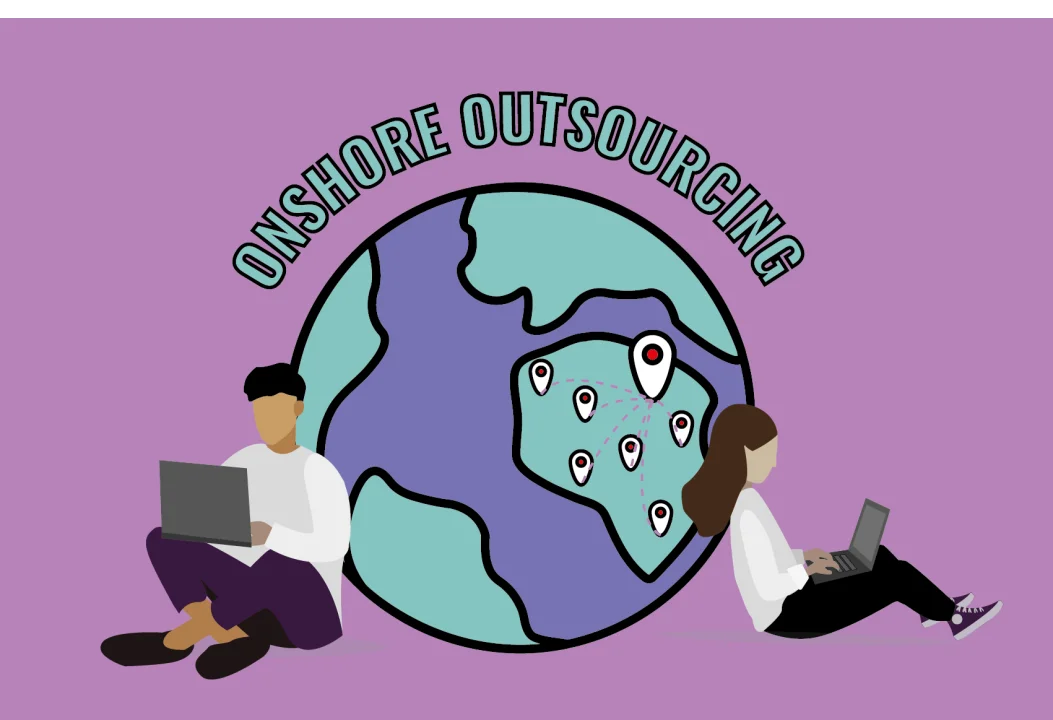
Onshore outsourcing, or domestic outsourcing, is the process of hiring a vendor based in the same country as your company. This approach offers many benefits, such as easier communication and a shared time zone and culture.
Moreover, in this case, the developers usually have a better understanding of your market. However, this approach is comparatively more costly and may not offer you a wide talent pool to choose from.
Best Suited For
Businesses with no budgetary constraints and want to prioritise communication and market knowledge.
2. Nearshore Outsourcing
Next, we have nearshore outsourcing. As the name suggests, this means hiring from a country close to yours.
Nearshore outsourcing also makes communication easier as the time differences are usually very small. Thus, it makes it easier for businesses to collaborate more efficiently.
While this approach is much cheaper than onshore, it still requires a significant budget as compared to more traditional approaches like offshore outsourcing.
Best For
Businesses that are looking for a balance between cost savings and convenient collaboration.
3. Offshore Outsourcing
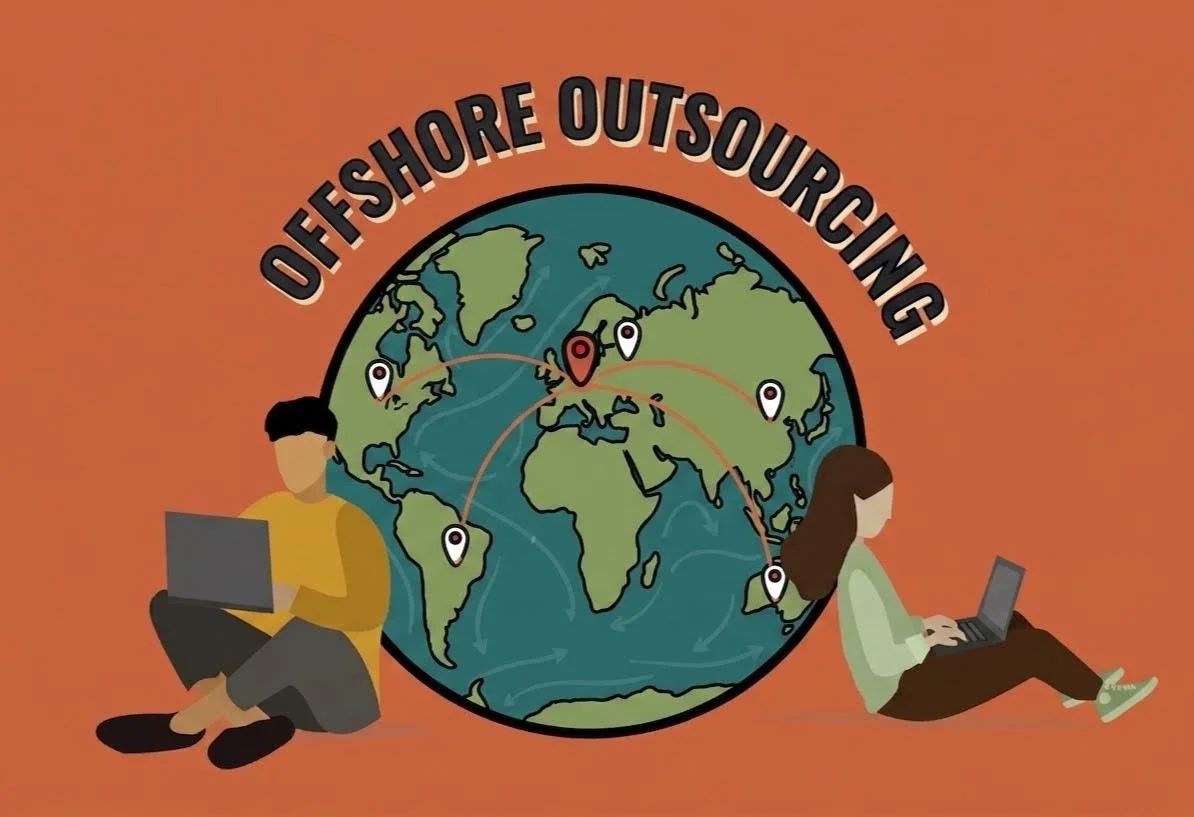
Offshore outsourcing is probably the most common approach of all. As you might already know, this process hires developers from a distant location, often from a different continent.
This allows businesses to avail a wide talent pool globally, that too, at very affordable rates. Moreover, if needed, they scale the development team with ease.
However, offshore outsourcing also introduces a significant communication barrier. Due to vastly different time zones and cultural contexts, the project might need extra oversight from your business’s side.
Best For
Businesses that want qualified developers but have a limited budget.
How To Outsource Mobile App Development? – Step-By-Step Guide
Now that you’re aware of the different outsourcing options, we can jump straight into the main discourse.
Below, we have listed seven steps on how to outsource mobile app development. This will aid you with all the prerequisites for contacting outsourced developers globally or in the same region as yours.
1. Identify Your Project Scope And Requirements
You need to start with a very in-depth knowledge of your own project. Try to build on your app idea as much as possible. Think of your app’s main objective, the main problem it will solve, and its key requirements.
Moreover, you should give your developers an idea of the features and functionalities you desire.
If you’ve already created an app development business plan or briefing report, this step shouldn’t be too much of a problem for you.
Existing Relevant Content:
How Do I Brief An App Development Agency? – Complete Guide
How To Write A Business Plan For Mobile App Development? – A Foolproof Strategy
2. Create A Realistic Mobile App Development Budget
Try to set a development budget that is realistic and within your capacity. If you want to run your business properly, you should never approach any outsourcing company without a fixed budget.
Remember, our budget should account for more than the initial development cost. It should also cover design, testing, third-party integrations, app store deployment, post-launch maintenance, and future updates.
To estimate the costs, start by identifying the app type, its complexity levels, your desired platform(iOS, Android, or both), the features you want, and, of course, the development team’s location. These factors can significantly influence the final cost.
One important tip we want to leave you with is that you shouldn’t just try to choose the cheapest developer. Instead, establish a realistic budget and look for a team that offers the right balance of cost, expertise, quality, and long-term support.
3. Choose The Right Outsourcing Model For You
Next, determine how you want to work with your outsourced development team. Your options generally include onsite, onshore, nearshore, and offshore outsourcing.
Your choice should depend on your budget, project complexity, communication requirements, time-zone preferences, and the amount of control you want over development.
Moreover, when choosing, we also recommend that you consider outsourcing based on engagement type. So, based on engagement, outsourcing can be classified into three models.
- Staff Augmentation
Staff augmentation, or outstaffing, basically means you hire external developers to work along with your existing in-house team.
You should go for this model if you have an internal development team but lack specific skills, or maybe you just need additional developers temporarily.
- Dedicated Development Team
You can also choose to outsource a dedicated development team for your company. This means you will hire a group of developers, designers, testers, and other specialists who work exclusively on your project for an extended period
This model will be perfect for you if you want to build a complex app and require continuous development effort.
Alternatively, if you simply don’t want the hassle of managing an in-house team, you can go for this model.
- Project-Based Outsourcing
With project-based outsourcing, you hand over a well-defined project to an external development team. Then, it is their responsibility to deliver the agreed product within a specific timeline based on your project scope.
If you’re a start-up or just a business interested in an MVP, this model would be perfect for you.
4. Choose A Payment Model
Once you know what type of outsourcing arrangement you want, try to decide how you’ll pay your development team. When it comes to outsourcing, the two common payment models are a Fixed Price model and a Time and Materials model.
- Fixed Price Model
As the name suggests, with this model, you would have to decide on a specific budget beforehand. This works well if your r requirements are clearly defined and unlikely to change.
- Time And Material Model
With this model, you don’t have to have a rigid budget before the development begins. Instead, this model charges you according to the actual hours worked and resources used. This provides more flexibility when requirements may evolve during development.
Whichever model you choose, try to clarify the following things.
- What is included in the price you finally quoted.
- How additional work will be charged.
- What happens if the project goes beyond its original scope.
5. Research And Evaluate Potential Development Teams
Now, with all the aforementioned criteria, look into multiple outsourced development teams. You need to research the development teams that you think you would be interested in collaborating with.
Don’t select an outsourcing company based solely on its website or quoted price. Shortlist many different potential vendors and try to judge whether they can actually deliver what you want.
Start by reviewing their portfolio and previous mobile app projects. Give extra attention to projects similar to yours in terms of industry, complexity, features, or technology.
In fact, if possible, try to ask them for references or case studies. Speaking with previous clients can give you a better understanding of the team’s abilities.
6. Compare Proposals And Negotiate A Deal
Once you have shortlisted a few development teams, ask for detailed proposals from each of them. Once you receive the proposals, you need to pit them against each other and see which wins.
Try to analyse whether the teams understand your requirements and how they plan on approaching them. Moreover, look over the technologies they recommend as well as how they have estimated the timeline and cost.
At this point, you should also try to know about their quality assurance process, testing methods, security testing, and bug-fixing procedures.
Once you’ve thoroughly compared the proposals, it’s time to negotiate the terms that matter the most to you. We don’t necessarily mean just negotiating for the lowest price.
Instead, focus on getting clear deliverables, realistic timelines, quality standards, ownership rights, and adequate support within the budget you fixed.
7. Sign A Contract And Establish Project Management Terms
Lastly, once you find your desired outsourcing team, you need to sign a contract.
The contract should include project scope, timeline, payment terms, ownership rights, confidentiality requirements, termination conditions, and procedures for handling scope changes.
Furthermore, you should try to establish how the project will be managed. You can decide on a specific project management methodology. Inform the team about how frequently you would prefer to receive updates, and the collaboration tools you would like to use for doing so.
How Much Does Outsourcing Mobile App Development Cost?
As you already know, the cost of outsourced mobile app development varies based on many factors.
The app’s complexity, industry, features, development location, technology stack, and engagement model are all significant factors in this case. To give you an estimate, the budget could range from $15,000 to over $300,000.
However, that’s not a practical number to understand what you might need to spend. So, we have categorised outsourced development costs into two groups.
Mobile App Development Outsourcing Hourly Rates
| Region | Hourly Rates |
| North America (US And Canada) | $100-$250/hr |
| Western Europe (UK, Germany, Netherlands) | $70-$180/hr |
| Eastern Europe (Poland, Romania, Ukraine) | $30-$100/hr |
| Australia And New Zealand | $80-$150/hr |
| Latin America (Brazil, Colombia, Argentina) | $30-$90/hr |
| Southeast Asia (Vietnam, Philippines, etc) | $15-$90 |
| South Asia (India, Bangladesh, etc.) | $15-$70 |
However, hourly rate shouldn’t be your only consideration. A lower rate can prove to be expensive if poor communication, failed Quality Assurance (QA), or mid-project rework extend the project timeline.
So, for an even more accurate understanding, let’s look at outsourcing costs by industry.
Mobile App Development Outsourcing Across Industries
| Industry | Outsourced Development Cost |
| Education | $30,000-$60,000 |
| E-commerce | $25,000-$60,000 |
| Food Delivery | $30,000-$70,000 |
| Real Estate | $30,000-$90,000 |
| Fitness And Wellness | $30,000-$100,000 |
| Social Media | $30,000-$120,000 |
| Healthcare | $50,000-$150,000 |
| Gaming | $50,000-$200,000 |
| AI-powered Apps / SaaS | $50,000-$250,000 |
Reducing The Risks Of Mobile App Development Outsourcing
Now, you know all about mobile app development outsourcing. However, for complete support, we would like to leave you with some very crucial pointers to help reduce any sort of risk associated with outsourcing.
-
Vet Your Development Partner Thoroughly
As we said before, don’t choose an outsourcing company solely because it offers the lowest quote. To reduce the challenges of outsourcing, properly look into your development partner.
Look into their portfolio, technical expertise, industry experience, and, more importantly, their reviews or references. Additionally, check each developer’s qualifications individually.
-
Use A Money-Back Guarantee Contract
Next, when drafting a contract, try to add a money-back clause in case things don’t go the way you planned.
You won’t be absolutely certain about the outcomes, so it’s better to be safe than sorry. With this clause, you won’t end up losing the majority of your budget if the development team fails to deliver your desired end product.
However, if a money-back guarantee clause isn’t possible, start with an MVP. It will give you a proper idea of how the actual, large-scale product will turn out.
-
Protect Intellectual Property And Data
It is safe to assume your app will contain some type of proprietary technology, customer information, business data, or sensitive user information. Before you launch the app, it is your responsibility to ensure the proper safeguarding of such data.
Hence, try to use Non-Disclosure Agreements (NDAs), access controls, secure development environments, encryption, and clear IP ownership clauses where appropriate.
Moreover, make sure the contract clearly specifies who owns the source code, designs, documentation, databases, and other aspects of the project once you’ve paid for them.
-
Establish Strong Communication Processes
Lastly, one of the biggest challenges of outsourced app development is the communication barrier. So, to avoid any sort of miscommunication, all parties involved should decide on a specific communication channel.
Additionally, settle on a specific meeting frequency and expected response times. Don’t just choose what’s best for you, be mindful of the development team and their workload.
In fact, regular demos and milestone reviews can help you identify problems before they become expensive to fix.
App-Concept: Your Ideal Partner for Mobile App Development

Choosing the right development agency is one of the most important decisions when building a successful mobile app. The ideal partner should handle the entire development process. As it will allow you to focus on your business while ensuring your app is designed, developed, tested, and maintained to the highest standards.
This is where App-Concept comes in! An agency based in Berlin, that can assist you in building any kind of app. From designing and building the app to testing and maintenance, app-concept can help you in everything.
With App-Concept, businesses can:
- Develop fully customized mobile applications tailored to their specific needs
- Build applications for iOS and Android
- Develop cross-platform applications for greater flexibility and efficiency
- Create intuitive and engaging UI/UX designs
- Conduct comprehensive testing and quality assurance
- Provide ongoing maintenance, updates, and technical support
So, what are you waiting for? Contact App-Concept Now!
FAQ
Q. Is it cheaper to outsource mobile app development?
Yes, outsourced mobile app development can be very affordable. However, the ultimate cost depends on your project requirements as well as the developer’s location and expertise.
Q. Who owns IP (Intellectual Property) when outsourcing software development?
Ownership should be explicitly established in your contract before all parties sign it. By default, the outsourcing team owns the intellectual property (IP) and the source code, unless your contract explicitly assigns the IP to your business.
Q. How can I ensure the quality of an outsourced mobile app?
From the beginning, you have to set clear quality requirements and establish a structured QA process. Use development milestones, functional and security testing, and regular demos to identify and address problems before launch.
Final Thought
That’s all on how to outsource mobile app development! Outsourcing can give you access to a much larger talent pool, helping you find someone who can effortlessly work for your business at an affordable rate. However, successful outsourcing requires more than finding a developer at an attractive price.
So, carefully evaluate potential developers, compare their proposals, and establish clear quality and security requirements. Then, draft a contract including intellectual property ownership, post-launch maintenance, and other vital criteria. And during all this, treat your outsourcing partner as a long-term development partner instead of a simple vendor!