Very few technologies enhance an app’s user engagement like Augmented Reality (AR) does. So, the urge to experiment with immersive experiences is rapidly growing among businesses. And along with this urge comes the concern about the cost to develop an AR app.
So, how much does it cost to develop an AR app?
In the app development world, AR apps generally fall more on the expensive side due to the challenges of merging digital and physical environments. So, basic apps with limited immersive experiences can be developed with around $30,000. However, to fully reap the benefits of AR, the budget can extend up to $300,000.
Stay tuned as we reveal all about the development price of an AR app. We have covered it all, from discussing core AR features to the various factors that affect the cost. So, let’s dive right into it!
How Much Does It Cost To Develop An AR App In 2026? – Based On Complexity
On average, AR app development cost ranges between $30,000 – $300,000. You must understand that app development costs can vary, considering many key factors. This is why we have given you an estimated range so that you truly understand all that goes into deciding an app development budget.
Let’s now take a deeper look at the AR app development cost. We have broken down the average cost on the basis of app complexity levels. Have a look at the time required to develop the apps and the examples too.
| App Complexity | Development Timeline | Cost | Use Case |
| Basic | 4-6 Months | $30,000-$50,000 | Educational visualizations, virtual try-ons, simple AR games, etc. |
| Mid-Level | 6-9 Months | $50,000–$120,000 | Training simulations, navigation guides, etc. |
| Complex | 1 Year Or More | $120,000–$300,000+ | Interactive storytelling, medical assistance, social gaming platforms, etc. |
Basic AR App
A simple app with very light Augmented Reality experiences usually costs between $30,000 to $50,000. Instead of developing a full ecosystem, these apps are built with a single function as the core. This is what helps to keep the development cost within a conservative budget.
Such apps mostly rely on pre-built logic, so their backend infrastructure is as minimal as it gets. Simply put, all you will be receiving from these apps is basic 3D models or trigger animations.
Mid-Level AR App
Mid-level AR apps that offer a bit more realistic and interactive AR experiences cost about $50,000–$120,000. Such apps have more enhanced spatial tracking and surface detection abilities. So, they are much more efficient for real-world use cases involving retail, training, or navigation.
What makes these apps more interactive is that they provide far more advanced real-time object interactions. More importantly, you will receive analytics tracking services, robust integration, and even multiple cloud-based content updates at this price range.
Complex AR App
Lastly, complex AR apps that offer deep immersive experiences can range between $120,000–$300,000+. Such apps are really good for creating a smooth blend of the digital and physical world as they have a real-time understanding of the surroundings and object occlusion.
Moreover, they have strong AI/ML integration abilities, which further prepare the app for better recognition and personalization services. In short, they are futuristic AR systems, typically developed for higher scalability, precision, and ultimately, engagement.
Existing Relevant Contents:
How Much Does It Cost To Develop An Educational App?
How Much Does It Cost to Develop an AI App?
How Much Does It Cost To Develop A Fitness App?
Core AR Features And Their Impact On Development Cost
Core features are what truly determine how an app will turn out. And, as a result, these features have the most significant impact on the development cost.
So, to truly grasp how much does it cost to develop an AR app, you need to shift a bit of your focus to the app’s foundational features. Here are the three most essential features of an AR app and their effect on the cost.
3D Modelling And Rendering
What even is an AR app without 3D modelling? This aspect of AR app development focuses on a wide array of interactive visualizations. This feature goes from low-polygon models to advanced texture baking.
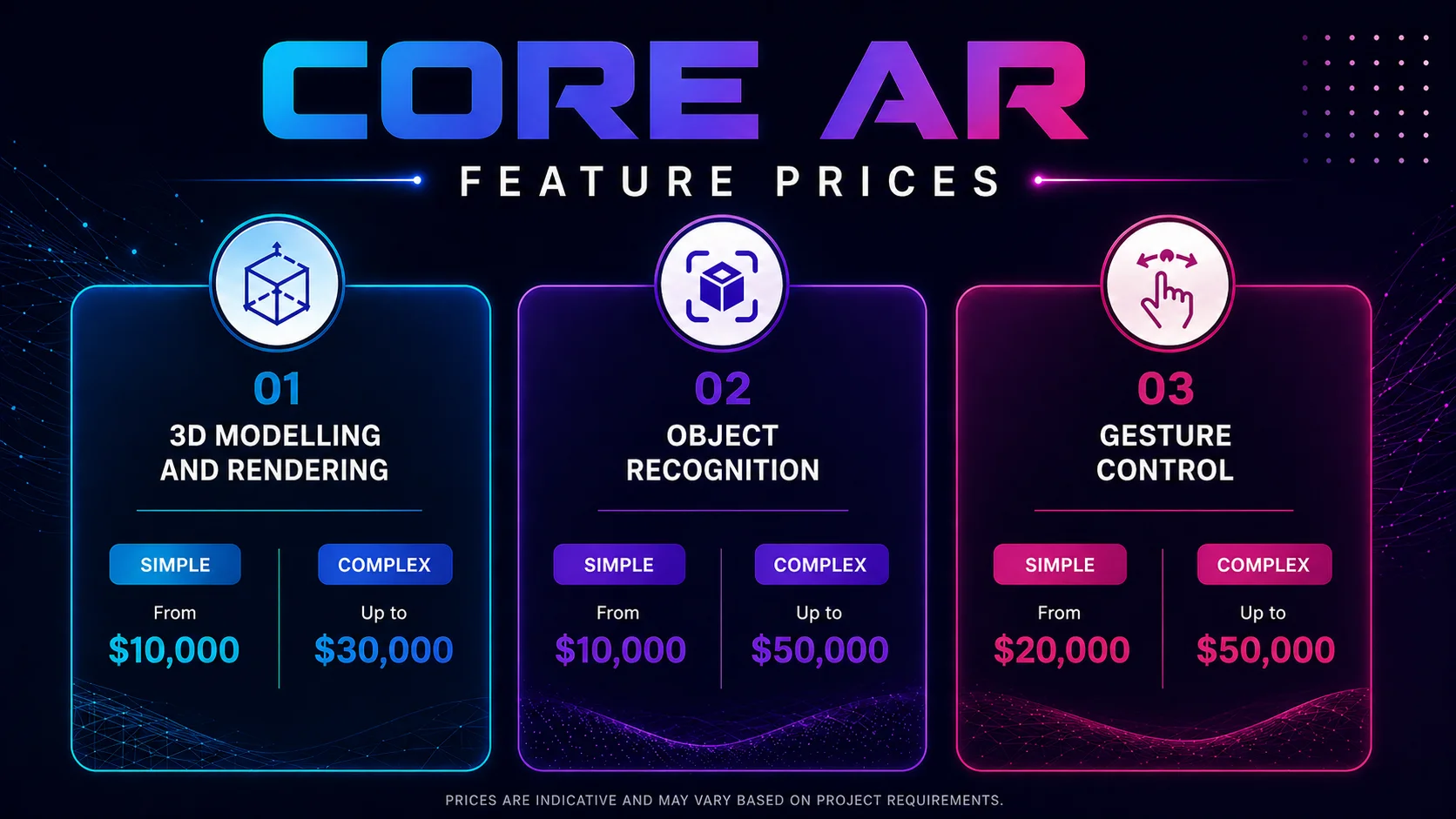
Hence, the cost shifts largely depending on the complexity of the 3D models. It should not cost you more than $10,000 for simple 3D models, among other pricing factors.
However, more realistic models that require very complex textures and lighting have a price range of $15,000 – $30,000. Beyond that, you will also have to consider the cost for animations, which might require an additional $10,000.
Object Recognition
Next, object recognition is another key feature in AR experiences, especially in the more advanced ones.
Basic detection or tracking of simple physical objects is usually implemented in more affordable AR options. The cost starts from $10,000 as it mostly involves matching images with pre-programmed models.
On the other hand, the cost is significantly more apps that require real-time recognition, especially in complicated environments. Some apps even need multiple object recognition, hence, the cost can go upto $50,000.
Gesture Control
Gesturer controlling features are what make these AR apps more interactive. From responding to simple taps to multiple rapid movements, gesture control makes it possible to create a highly intuitive interface.
The development cost for simple gestures is around $20,000. This is for more affordable AR apps that have a limited development budget, but still want to provide a genuine experience.
However, if you’re opting for a more advanced immersive and intuitive experience, the budget will definitely increase. To implement more complex gesture recognition abilities, such as rotations or rapid hand movements, it will cost you almost $50,000.
Factors That Influence The Cost Of AR App Development
Beyond the features or complexity levels of an AR app, many factors influence development costs. Below, we’ve revealed what these factors are and how they affect the costs.
Type Of AR Technology
There are many different Augmented Reality approaches. And, of course, they vary in the development effort required and cost.
Marker-based AR and basic over experiences are much easier to develop, so they don’t add much to the development cost.
However, things get a bit trickier when the app requires more advanced tracking or realistic visuals. This is when SLAM ( Simultaneous Localization and Mapping) and Markerless AR technologies are utilized. This requires a much higher development cost.
Platform Choice
The chosen platform where you want to launch the AR app is a crucial factor in determining the development. Cross-platform development is typically the top choice due to its affordability.
Single-platform development can be affordable, too, but, it limits the app’s demographic. You can opt to develop separate native apps for iOS and Android. However, this increases the cost significantly because the app will have to be optimized for multiple devices and screen sizes.
UI/UX Design
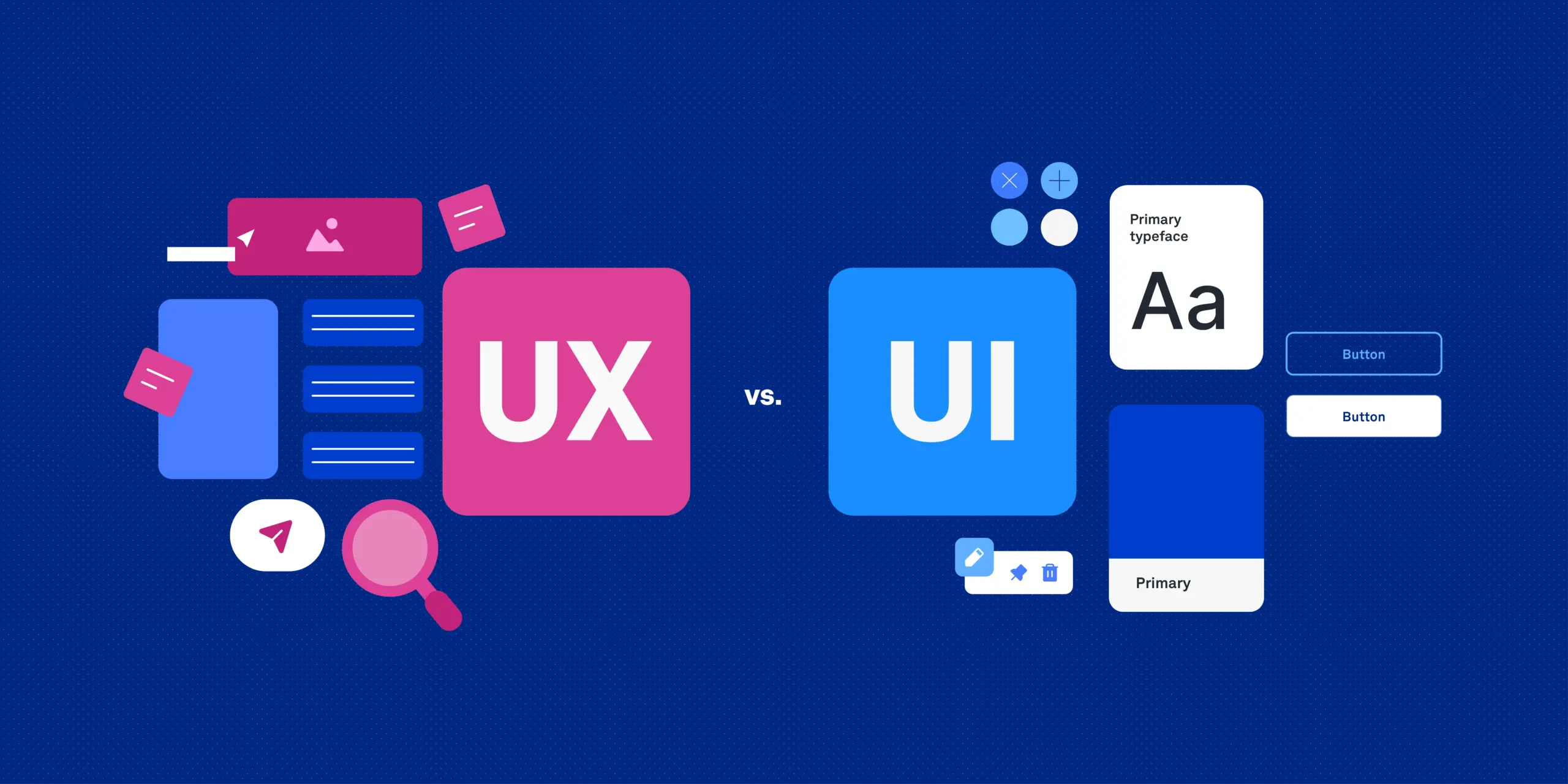
A high-quality UI/UX design is the key to a smooth, intuitive AR app. When we say high quality, we mean intuitive 3D interactions, rapid gesture controls, custom animations, and transitions.
This involves a heavy focus on testing and refining the user experience. So, it requires a more robust development effort as well as investment.
You can minimize the development cost by opting for standard UI patterns with limited interactions. However, it won’t give much depth to the overall app, compromising the user interaction.
Backend Development And Integrations

The backend or the server-side infrastructure is where the real magic happens in bringing it all together for your own personalized AR app.
Basic AR apps might run on a simple, low-effort backend. They can get by with minimal data processing, analytics, or 3D assets. So, the development cost in terms of a simple backend can be more affordable.
However, a good immersive experience requires strong data-processing abilities. The backend work involves crucial tasks like managing multiple user accounts, cloud storage, and real-time syncing. Not only that, but the app experience is also dependent on API integrations.
AR apps require multiple integrations, such as with eCommerce platforms, maps, and AI services. And, the more integration an app requires, the stronger the infrastructure. Hence, overall, a much higher cost.
Device Compatibility
AR apps require many supporting devices for proper functionality. These supporting devices allow the apps to work across all real-world environments.
Hence, they have a significant effect on the development cost. The cost will increase depending on how many devices are required and the extent of real-world testing that they require.
Additionally, debugging support may also be required. In general, AR testing is more complex than regular apps due to real-world variables. Hence, the cost can be a bit more on the expensive side.
The budget can be minimized by limiting the device support and testing scope. However, that would also mean you have to let go of many crucial support systems.
Development Team

Finally, one remaining influential factor is the development team. And, why wouldn’t they be so? The entire outcome of the app is truly dependent on the team’s expertise and experience.
Needless to say, the cost will be much higher when working with highly specialized AR experts. Such developers usually have the highest hourly rates, especially if they’re from North America or Western Europe.
However, a more affordable option is hiring from teams from regions with lower hourly rates, such as Asia and Eastern Europe.
Turn Your AR App Vision Into Reality With App-Concept
Developing an AR isn’t for the weak. It requires the right expertise, industry experience, and a strong approach.
So, it can be quite difficult to find the right developers who not only have the right skills but can also understand your vision.
To put an end to your search for the right development team, let us introduce App-Concept to you. It is a top app development agency in Germany, that aims to bring every client’s vision to life.
Let’s have a deeper look at all the services App-Concept has to offer to you.
- Strategic development plan based on strong research.
- Blend of AI and human intelligence to maximize efficiency.
- Strong industry-specific development support.
- Platform-specific development solutions.
- Agile methodologies to ensure higher satisfaction.
- Seamless API services.
- Consistent post-launch maintenance and support.
App-Concept has worked with a variety of clients across many different industries. With their several years of experience, App-concept has built a strong portfolio that proves what they’re truly capable of.
SAJOKI and the C-AR App are some of the innovative apps App-Concept has developed. Take a look at them to understand the kind of services you will receive from them.
So, don’t wait any longer! Contact App-Concept to get the AR app of your dreams!
FAQ
Q. How long does it take to develop an AR app?
A basic AR app with limited backend support can be built within 4-6 months. However, as the app gets complex, the development timeline can extend over a year.
Q. Why are AR apps more expensive than regular mobile apps?
The core of the AR app is a blend of physical and digital environments, which requires 3D modeling, real-time rendering, advanced tracking, and extensive testing. So, the development process is much more sophisticated and expensive than the process of regular apps.
Q. Is augmented reality worth it?
Yes, it absolutely is! Immersive experiences are becoming a common trend in diverse sectors such as education, visual training, and entertainment. Hence, they deliver a very high ROI.
Conclusion
Augmented Reality (AR) is becoming increasingly popular with each passing day, and that too, for all the right reasons. And hopefully you got a good idea on how much it costs to develop an AR App.
So, always try to keep the complexity level and factors in mind. Then make a budget based on the features and then develop your AR app. We hope this guide was helpful for you and you will be able to build the best possible AR App.