
If you’re a start-up owner, an entrepreneur or simply a business owner planning to launch your own app, you’ve probably been told to go with hybrid app development.
Because of its cost-effectiveness, this development process is often suggested to businesses with a tighter budget. But nobody actually explains what exactly makes hybrid apps more affordable.
So, how does hybrid app development reduce costs?
Hybrid app development lowers costs through several factors, but the main reason lies in code reusability. Reusing the codebase for multiple platforms cuts the development hours, simplifies maintenance and post-launch updates, and allocates development team resources more efficiently.
Stay tuned as we reveal all about the cost-effectiveness of hybrid app development. Moreover, we will help you choose between native vs hybrid app development, based on your requirements. So, let’s dive right into it!
What is hybrid app development?
Before we delve right into how hybrid app development can reduce costs, let’s first understand what hybrid app development really is.
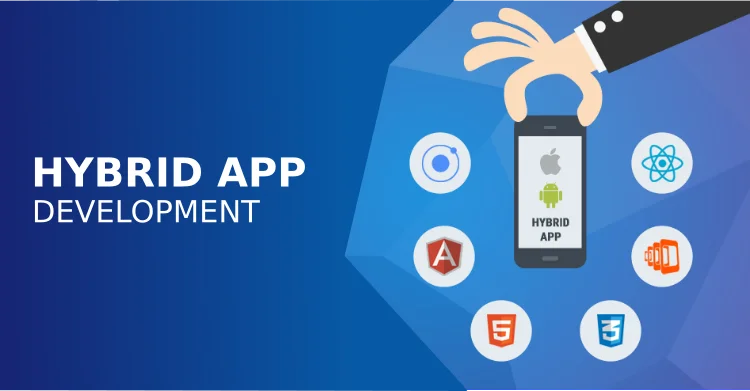
Hybrid app development, commonly known as cross-platform development, is a development strategy that allows mobile applications to run on multiple platforms such as iOS and Android.
When building the app, developers use a single codebase that suits the operations on both Android and iOS. Thus, the overall development process is much simpler compared to a native app development process.
To further break it down, the process utilises a blend of native and web technologies. The core of the app is built through standard web technologies like HTML. But what adds the hybrid aspect is that the code is then wrapped inside a native application.
And that basically sums up the hybrid app development process!
How Hybrid App Development Can Reduce Costs – 8 Simple Ways
Now that we are all clear about what hybrid or cross-platform app development is, we can dig deeper into its cost-related factors.
If you’re here, it is safe to assume you’ve heard that hybrid apps can help minimize the development cost, as compared to developing a native app. While yes, it is absolutely right, the question is how?
Well, here’s how hybrid app development can reduce costs.
1. Single Codebase Across Multiple Platforms
As mentioned before, hybrid app development utilises a single codebase to run the app across multiple platforms. This is exactly what makes this development process so cost-effective.
In fact, developers can reuse almost all of their code for diverse platforms based on the app requirements. So, this saves the majority of the development time, effort, and cost required to build a native app across two separate platforms.
2. Reduced UI/UX Effort

For hybrid app development, developers can rely on pre-built UI libraries for launching the app on both Android and iOS. In fact, UI/UX designers can reuse many aspects of the design work across the two platforms.
On the other hand, native apps require developers to carefully craft two different UI, which results in a ton of platform specific re-design. Besides, it’s not just about the core UI elements, it also involves visual interactions.
Hybrid app designers don’t have to go through this hassle. Instead, they can just focus on creating a shared, more seamless design system.
Thus, the development team can deliver a more well-polished end-product with minimal development effort. Hence, the pricing is much lower too.
3. Minimal Testing And Quality Assurance Budget
Hybrid app development reduces the amount of platform-specific testing required. But developers still need to test applications across different devices, operating systems, and screen sizes to ensure consistent performance.
This reduces so much of the overall budget, making it a cost-effective option.
For a native project, QA engineers must test the apps individually, across both platforms. Consequently, it requires separate debugging and fixing.
However, with hybrid apps, unit tests and integration tests are done across the shared codebase. Thus, the process is much quicker and more efficient.
4. Lower Maintenance And Update Costs

Next, maintenance and updates are much faster when a codebase is shared across platforms.
Developers maintain a single codebase, which significantly reduces update effort, although platform-specific adjustments may still be necessary.
So, bug fixes or upgrades are so much simpler since they are the same for both platforms. So, the maintenance team is likely to charge much less, which wouldn’t have been the case for native apps.
5. Faster Time To Market

By now, there should be no doubt that hybrid apps have a much faster development period. Consequently, they are also easier and faster to launch in today’s competitive market.
And, launching an app as soon as possible means you can collect user feedback and make improvements as required. This will put you a step ahead, and overall, it will make a very prominent difference in your revenue.
So, shorter development paired with quicker launch ensures that your app has the most favourable outcomes possible. You will not only be cutting costs but also maximizing the revenues.
6. Efficient Resource Allocation For The Development Team
To release a native app across both Android and iOS platforms, you would need two different, specialized development teams. So, while there might be some shared roles, you would still have to invest in native iOS and Android developers separately.
On the other hand, for a hybrid app, you would need one single, skilled hybrid app development team. They can handle the entire project efficiently, that too, with more compact staffing.
This cuts the cost on the overall development team’s budget. But there will be no compromise on the quality of the project, as they can efficiently allocate their resources throughout the team.
7. Smoother Third-Party Integration

Another reason why hybrid app development is so affordable is that they’re easier to integrate with third-party plug-ins.
Since the core of hybrid apps is web-based, they can be effortlessly plugged into external services via pre-existing APIs and tools. So, developers don’t have to work on complex, platform-specific code for integrated features.
This saves a lot of development effort and reduces the development costs significantly.
8. More Unified Analytics
Hybrid apps will offer you more unified analytics, making it easier to track different events all at once. Using their web technologies, hybrid apps can broadcast identical events in a central dashboard.
Moreover, instead of maintaining and updating two native SDKs to accommodate changes in analytics requirements, developers can work with a single SDK integrated across both platforms.
This not only eliminates fragmented data, but it also reduces the workload for developers. Thereby, it lowers the overall development cost too.
Existing Relevant Contents:
How Much Does It Cost To Develop A Fitness App?
How long does it take to develop a mobile app?
How Much Does It Cost to Develop a Web App?
How Much Does It Cost To Develop An Educational App?
Additional benefits of hybrid apps
Cost-effectiveness isn’t the only reason why a lot of business owners opt for hybrid app development. There are many additional benefits of hybrid apps, making them a popular choice for many.
Here is a breakdown of the other benefits you will get from hybrid apps.
1. Easier Scaling Across Platforms

Just like how hybrid apps require low maintenance, they are also very easy to scale. As your business grows and needs to support extra devices or platforms, hybrid app developers can extend the existing application without much effort.
This leads to a quicker, smoother, and very robust scale that most apps eventually require.
2. Lower Training Requirements
Hybrid app development uses widely used and familiar web technologies such as HTML, CSS, JavaScript, and TypeScript. These are some common programming languages that all developers, beginner or experienced, are well-versed with.
Moreover, using such familiar development tools and frameworks reduces the learning curve for new developers.
Overall, businesses can quite easily utilise these prevalent talents rather than hiring separate iOS and Android specialists.
3. Wider Audience Reach

With hybrid apps, businesses can launch their app on both iOS and Android simultaneously. This makes their product accessible to a larger audience from day one.
And, this isn’t just about targeting a wider audience. With hybrid apps, you would be doing so without doubling development costs. This improves your ROI and creates a better opportunity for customer acquisition.
4. Cost-Effective MVP Development
For start-ups or a business that wants to validate an out-of-the-box idea, hybrid development offers a more affordable way to launch a Minimum Viable Product (MVP).
With an MVP, companies can test market demand across multiple platforms while also lowering the upfront investment or risk associated with building a fresh idea.
4 Best Hybrid/Cross-Platform App Development Frameworks In 2026
Well, now you know all about the benefits of hybrid app development and how it reduces the overall development cost. So, if you decide to settle on hybrid development for your own app, you must know all about its framework.
To help you begin this journey into hybrid apps, here are the five best hybrid app development frameworks in 2026.
Flutter
Flutter is a widely known cross-platform framework developed by Google. It is an open-source framework that provides the right support to developers who build applications for iOS, Android, web, and desktop from a single codebase.
It uses the Dart programming language, which provides very powerful and flexible development abilities.
What Flutter Offers
- Near-native performance
- Fast development with Hot Reload
- Consistent UI across platforms
- Large developer community
- Strong support from Google
Best Use Cases
- eCommerce apps
- Healthcare applications
- Fintech solutions
- On-demand service apps
- Enterprise applications
React Native
Another popular framework for hybrid apps is React Native, developed by Facebook. With this framework, developers create mobile applications using JavaScript and React.
While it specializes in cross-platform development, React Native also aims to provide seamless access to native components. Thus, offering a near-native performance.
Why Choose It?
- Uses JavaScript, one of the world’s most popular languages
- Large ecosystem of libraries and plugins
- Strong community support
- Faster development and maintenance
- Easy integration with existing React web applications
Best Use Cases
- Social networking apps
- SaaS platforms
- Marketplace applications
- Startup MVPs
- Content-driven applications
Ionic
Ionic is a web-based hybrid development framework that uses HTML, CSS, and JavaScript. It is yet another top choice for creating applications that run across multiple platforms.
It is integrated with AngularJS, which provides a well-structured environment for dynamic web apps.
Why Choose It?
- Ideal for web development teams
- Lower development costs
- Extensive UI component library
- Rapid prototyping capabilities
- Strong Progressive Web App (PWA) support
Best Use Cases
- Internal business applications
- Employee portals
- Customer self-service apps
- Educational platforms
- Content management systems
.NET MAUI
Lastly, we have .NET MAUI, which is Microsoft’s modern framework for building user interfaces in cross-platform applications. It uses C# and .NET technologies to deliver robust performance.
By using .NET MAUI, developers can write a single business logic and UI for a shared codebase.
Why Choose It?
- Excellent integration with Microsoft products
- Shared code across mobile and desktop platforms
- Enterprise-grade security
- Strong support for cloud-based applications
- Ideal for organizations already using Microsoft technologies
Best Use Cases
- Enterprise software
- Business management applications
- ERP and CRM solutions
- Internal corporate tools
- Data-driven applications
Hybrid VS Native App Development – Which one is for you?
Hybrid apps are great in terms of affordability, but it can’t be the only reason for you to settle on a hybrid app development. It’s important to wisely choose between native vs hybrid app development, based on your personal needs.
So, the table below sums up the core difference between hybrid and native app development to help you decide which suits you better.
| Factor | Hybrid Apps | Native Apps |
| Core Development | A single codebase is used to build apps for multiple platforms (iOS and Android). | Separate apps are developed specifically for each platform using platform-specific languages. |
| Development Languages | JavaScript, TypeScript, Dart, HTML, CSS | Swift/Objective-C (iOS), Kotlin/Java (Android) |
| Popular Frameworks | Flutter, React Native | Swift, Kotlin |
| Code Reusability | The majority of the code can be reused. | Very minimal code reuse. |
| Estimated Development Cost | $20,000 – $150,000+ | $35,000-$300,000+ |
| Development Time | Faster development | Longer development cycle due to platform-specific coding. |
| Maintenance | Low maintenance as updates are applied to one codebase. | High maintenance as updates must be implemented separately. |
| Performance | Good for most business apps but may lag in robust, graphics-intensive scenarios. | Excellent performance with direct access to device hardware and APIs. |
| Offline Functionality | Supported but may require additional implementation. | Strong offline capabilities and better local resource management. |
| Security | Dependent on the framework and plugins used in the development process. | Generally stronger security due to platform-specific protections. However, overall security of an application depends largely on implementation rather than development approach alone. |
| Best For | MVPs, startups, business apps, eCommerce apps, social networking apps, etc. | Enterprise needs, Gaming apps, AR/VR apps, real-time applications, complex fintech apps, etc. |
FAQ
Q. What is the performance like of hybrid apps?
Based on the framework, hybrid apps can offer near-native performance. However, when it comes to processing speed or graphics interaction, hybrid apps do not perform as well as native ones.
Q. Are hybrid apps suitable for startups?
Yes, absolutely! Hybrid development is one of the most popular choices for startups because it allows them to launch faster and validate their ideas across multiple platforms with low investment.
Q. How much does it cost to develop a hybrid app?
The cost for hybrid app development ranges from $20,000 to $150,000+ based on the framework, app features, backend requirements, etc.
Bottom Line
We hope by now you know how hybrid app development can reduce costs. Hybrid app development is one of the most efficient ways to get the app of your dreams without breaking your bank. By using a shared code base, companies can lower the development as well as maintenance effort.
Moreover, they speed up the marketing process. However, it’s not just about the initial development stages. Hybrid apps are also much easier to update. Altogether, these little services from hybrid apps help reduce the development cost significantly, making it a budget-friendly choice.