
In today’s digital world, businesses are always on the lookout for ways to stay connected to their customers. Having a website is no longer sufficient. Today, people expect a faster, smoother, and more personalized experience right on their phones.
So, why do all companies want to develop their own apps?
Companies develop their own apps to enhance the overall customer experience, improve engagement, gain more control over their platforms, increase sales, and establish a stronger brand presence in a very competitive digital world.
If you’re interested in learning more about this trend and how it affects businesses of all sizes, then you’re in the right place. This is a guide that will walk you through all of the major reasons why this trend is growing so quickly.
The Growing Importance of Mobile Apps in Business

Mobile apps are no longer a trend. They’re a necessity for businesses in this modern world. Companies are moving away from traditional ways of doing things and embracing a more digital-focused approach.
Ever wondered, “Why are businesses investing so heavily in mobile apps today?”
The reason why businesses are investing so heavily in mobile apps is due to a change in customer behavior and rising expectations.
Smartphones are now the primary way people interact with brands. Apps provide faster access, better performance, and a more controlled experience.
Businesses that fail to adapt risk losing customers to competitors who offer smoother digital experiences.
Some key reasons why mobile apps are becoming essential include:
- Direct communication with customers through notifications and updates.
- Faster and smoother user experience compared to websites.
- Constant brand visibility on users’ devices.
- Better tracking of user behavior and preferences.
- Increased sales through simplified buying processes.
- Personalized content and offers for users.
- Stronger competitive advantage in the market.
- Limited offline access for better usability.
- Higher customer retention through engagement features.
- Use of device features like GPS, camera, and biometrics.
10 Top Reasons Companies Are Building Their Own Apps
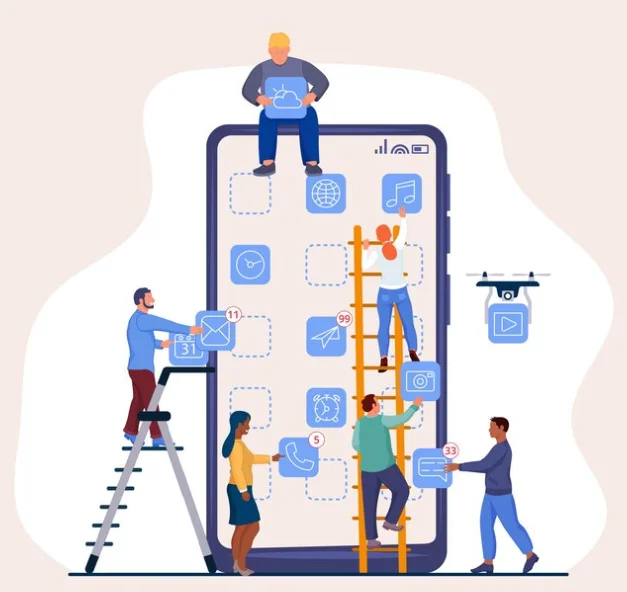
There are various compelling reasons behind this. It is not only about technology; there are other factors like business, branding, and trust too.
Ever thought of asking yourself, “What are the advantages of having your own business app?” Let’s find out the top reasons behind this.
1. Improved Customer Experience
Using mobile apps provides a better and faster experience than using the web. Everything is mobile-centric in the application.
Users can access the application without any delays. This provides a better experience for the customers.
Studies show that mobile apps can deliver up to 1.5–2x faster load times than mobile websites. So, it can significantly reducing bounce rates.
Also, personalized experiences can increase customer satisfaction by over 20%. In mobile apps, personalization is also possible based on the behavior of the customers. This makes customers feel special.
2. Direct Communication with Customers
Using mobile apps provides the opportunity for businesses to communicate directly with the customers through push messages. This is faster than communicating through emails and social media.
Here’s an interesting fact. Push notifications have an average open rate of 20–30%, compared to email open rates of around 2–5%. Real-time communication also increases user retention by up to 3x.
Businesses can communicate with the customers instantly through mobile apps. This keeps the customers engaged with the business.
3. Stronger Brand Presence
Here’s another reason why App Development is so important for Businesses. It is to create brand presence for the company or business.
An app helps a brand gain more exposure. Every time the customer uses their phone, the app’s logo reminds them of the business.
This helps the customer get accustomed to the brand. Gradually, this helps in building brand loyalty.
On average, users spend over 4–5 hours daily on mobile devices, with more than 85% of that time spent on apps. This repeated exposure strengthens brand recall significantly.
So, an app helps the brand control the brand experience. The app’s design, tone, etc., remain under the brand’s control.
4. Increased Customer Engagement
An app helps the customer stay engaged with the brand. Various interactive elements in the app keep the customer occupied.
Mobile apps can increase customer engagement rates by up to 3x compared to mobile websites. Features like gamification and in-app rewards can boost session duration by 20–40%.
It also helps in retaining the customer. A customer tends to stay longer with the app. Interactive elements in the app make the customer experience better.
5. Higher Sales and Revenue
It is said that mobile apps typically achieve conversion rates that are 2–3x higher than mobile websites. In some industries, app users contribute up to 70% of total digital revenue.
An app helps in generating sales. The app helps the customer make the purchase in fewer steps.
Fewer steps in the purchase process lead to higher conversion rates. An app helps the business generate more revenue.
6. Access to Customer Data
The apps can be useful in getting insights into customer behavior. A business can access customer data. The data can be used to make better business decisions. It can be used to improve marketing strategies. Understanding customers can be helpful in making targeted marketing campaigns.
7. Competitive Advantage
Not all businesses have their own apps. Businesses that create their own apps are at a big advantage.
Ever wondered, “Why do some businesses grow faster than others online?”
Well, One reason is a strong online presence. Having an app can put a business at a big advantage. It shows a business is innovative and customer-centric.
8. Improved Customer Loyalty
You will be shocked to know that research shows that increasing customer retention by just 5% can boost profits by 25–95%. Loyalty program members also tend to spend 12–18% more than non-members.
That is why most of the time the apps are used to create customer loyalty programs. Businesses can reward customers.
The customers will feel valued and will be loyal. Customer loyalty is more valuable than acquiring new customers. Having loyal customers can be more valuable than acquiring new customers.
9. Faster and Easier Transactions
Apps help in reducing the time taken to do something. Now, transactions can be done quickly and in a hassle-free manner. Moreover, saved information facilitates easier transactions. This is beneficial for users.
10. Full Control Over Platform
One of the advantages that apps enjoy over other platforms like social media and online marketplaces is that they offer full control to businesses. This is because no third party is involved. Companies can do whatever they want. This is also one of the reasons why companies want to develop their own apps today.
Existing Relevant Contents:
How To Choose The Best Mobile App Development Company?
What Does a Mobile App Developer Do?
How Much Does It Cost To Develop An App?
8 Challenges Companies Face While Building their Own Apps

The advantages of creating an app are quite compelling. However, creating an app is not always easy. A number of challenges are associated with it. Ever wondered, “Why do some apps fail despite good ideas?” This is because of poor execution.
Creating an app is not easy. It requires proper planning and updates. Without proper guidance, it is difficult for businesses to do so. This is also one of the reasons why companies want to develop their own apps today.
1. Budget Limitations
It has been observed that businesses do not have an accurate idea of the expenses associated with developing an app at the initial stages. Budget limitations can directly impact the quality of the app developed. This is because businesses might compromise on certain aspects to save money.
A low budget can result in the development of a low-quality app. Proper budgeting is required to ensure the long-term success of the app. It is very important to have an accurate idea of the initial as well as the future expenses associated with developing an app.
2. Technical Complexity
Developing an app involves the integration of multiple technologies. The frontend, backend, and database all have to work in perfect harmony. The technical complexities associated with developing an app can be very high for businesses that are not technically savvy. Small mistakes can result in serious performance issues.
The use of improper technologies can also result in serious problems in the long run. This can only be avoided with the help of expert guidance. Proper guidance can ensure the selection of the right technologies at the initial stages.
3. Lack of Skilled Team
In developing an app, a team of designers, developers, testers, and managers is required. Recruiting all of these separately is a big task. When a project is handled by a team of unskilled individuals, it may lead to poor execution.
This may cause delays in project completion or may cause it to be executed in a poor manner. Working with skilled individuals is always beneficial. It ensures efficiency in completing a project within a given period.
4. Time Management Issues
Time management is a big problem for many companies. If proper attention is not given to this, it may cause a project to be completed in a haphazard manner.
When a project is delayed, it may cause frustration. A well-planned timeline is required to keep all things organized.
5. Changing Requirements
There is always a possibility for changing requirements in businesses. New features or new ideas may be incorporated in the middle of the project. Changing requirements can be problematic in such situations. Developers might have to recreate certain portions of the app, resulting in delays.
Changing requirements can also be costly. It becomes challenging to ensure consistency in the app’s design and features. Effective planning is essential in such situations. Unchanging requirements ensure smooth development.
6. Poor Communication
Poor communication between teams is another challenge. Developers might not understand certain requirements. Poor communication leads to errors in app development. Design issues might also be problematic.
A lack of regular updates is another challenge. Businesses might not be aware of the actual status of the project. Effective communication is essential. It ensures that all teams are on the same page regarding the objectives.
7. Security Challenges
The app will be dealing with sensitive user information like passwords and money. Security risks can cause data leaks if proper measures are not put in place. Security risks can break user trust and harm a company’s reputation. It is also costly to correct security risks after the app has been launched.
The app will be developed using proper security measures from the start. Security measures will include encryption and authentication. Security will increase user trust in the app. It will also shield companies from legal issues.
8. Post-Launch Maintenance
Some companies assume that app development is complete after launching their app. However, this is not true since apps require constant updates and enhancements. The app will require frequent changes to keep up with new devices and user feedback. Failure to maintain the app will cause performance issues.
The app will not be competitive if it is not frequently updated. It will be removed by users if it is not performing well. And the app will be frequently updated to keep it competitive and functional.
5 Common Mistakes Businesses Should Avoid

Many businesses jump into development without adequate planning. This causes poor outcomes and unproductive investments.
Ever asked yourself, “What are the common pitfalls that businesses should avoid when they develop an application?” Well, here are some of the major ones.
1. Skipping Market Research
Failing in market research means that the application has been created with features that are not actually needed. Businesses may end up designing applications based on assumptions rather than requirements.
This may cause the application to have low usage and poor retention of users. If the market is not well understood, then the chances of the application being successful are low. A well-researched application has higher chances of being successful. It is more likely to meet the needs of the users.
2. Poor User Experience
Complex navigation and a messy interface are not appreciated by the user. An app that is not easy to use will be deleted by the user. First impressions are important, and a bad experience in the first few minutes of using the app may result in the user deleting the app.
An easy interface with a clean design makes the user experience pleasant. It should be easy for the user to perform tasks. Good user interface/user experience leads to a positive experience, resulting in a high level of engagement. It has a major impact on the success of the app.
3. Lack of Testing
An app not tested before launch may result in a poor experience for the user due to crashes and bugs. An app that does not function well may harm the reputation of the app.
Testing the app before it goes live ensures that it performs well. There are different stages in the testing phase, and a well-tested app will perform well in the market.
4. Ignoring Updates
Apps always need updating to remain relevant and functional in the market. Technology and user needs are constantly evolving. If apps remain unupdated, they may not function well in new devices.
This makes the users dissatisfied with the apps. Updates are essential in ensuring the apps remain fresh and competitive.
5. Weak Security Measures
Security risks may result in major problems. And data breaches may result in loss of money. Users expect their data to be secure in the apps. If the apps lack security, they lose credibility at once.
Also, developers must ensure that the apps have robust security measures. Security measures include encryption and authentication. Security of the user’s data should always be a top priority.
How App-Concept Can Help Businesses Create Successful Apps
By now, you should understand the importance of apps for any business. However, creating a successful app is not an easy task. You need expertise and a team of experts to do this job successfully.
This is where App-Concept can help you.
App-Concept is a professional app development company that can help you create powerful apps. They specialize in creating scalable, user-friendly, and performance-driven apps. By using their services, you can enjoy various benefits such as:
- Custom mobile app development
- Cross-platform and native app development
- User interface and user experience design
- Backend development and API integration
- Testing and quality assurance
- Maintenance and updates
It is always better to work with a professional team. A professional team can help you achieve your goals quickly and successfully. So, if you are looking for something like that, Contact App-Concept now!
Frequently Asked Questions
Are mobile apps necessary for small businesses?
Not always, but it is a strong competitive advantage for small businesses. Mobile apps help small businesses compete against big brands.
How long does it take to build a mobile app?
The time required depends on the features of the app. For a simple app, it takes a shorter period, but for a complex one, it takes a longer period.
Is it expensive to develop a mobile app?
The cost of developing a mobile app varies. It depends on the features of the app.
Can one app be developed for both Android and iOS platforms?
Yes, it is possible by developing a cross-platform app. This is cost and time efficient.
Do mobile apps require updates?
Yes, updates are necessary for better performance and security. Updates keep users engaged.
Conclusion
The reason why companies want to create their own apps is because they can enhance their customers’ experience and increase their engagement. Moreover, they can have full control over their online presence.
With increasing competition, it is no longer a choice for any business to have a good app. It is a MUST! So, we hope you get the best possible app for your business to get the finest outcome.