
These days, it seems like everything we use runs on an app. Whether it’s food delivery or banking, mobile applications have changed the way we live and work. However, most people do not stop to think about who creates these digital products. Behind every great experience is a team of people making it happen.
What is the job of a mobile app developer?
A mobile app developer designs, builds, tests, and maintains applications for devices. They take ideas and turn them into functioning applications. They write code, debug problems, and optimize performance. Along with that, they ensure the app works smoothly across all devices and platforms.
If you want to learn more about the specific tasks of mobile app developers, their working methodologies, required skills, and tools, then keep reading this article. It will give you an in-depth analysis presented in simple language. This guide will cover all aspects comprehensively.
Understanding the Core Role of an App Developer
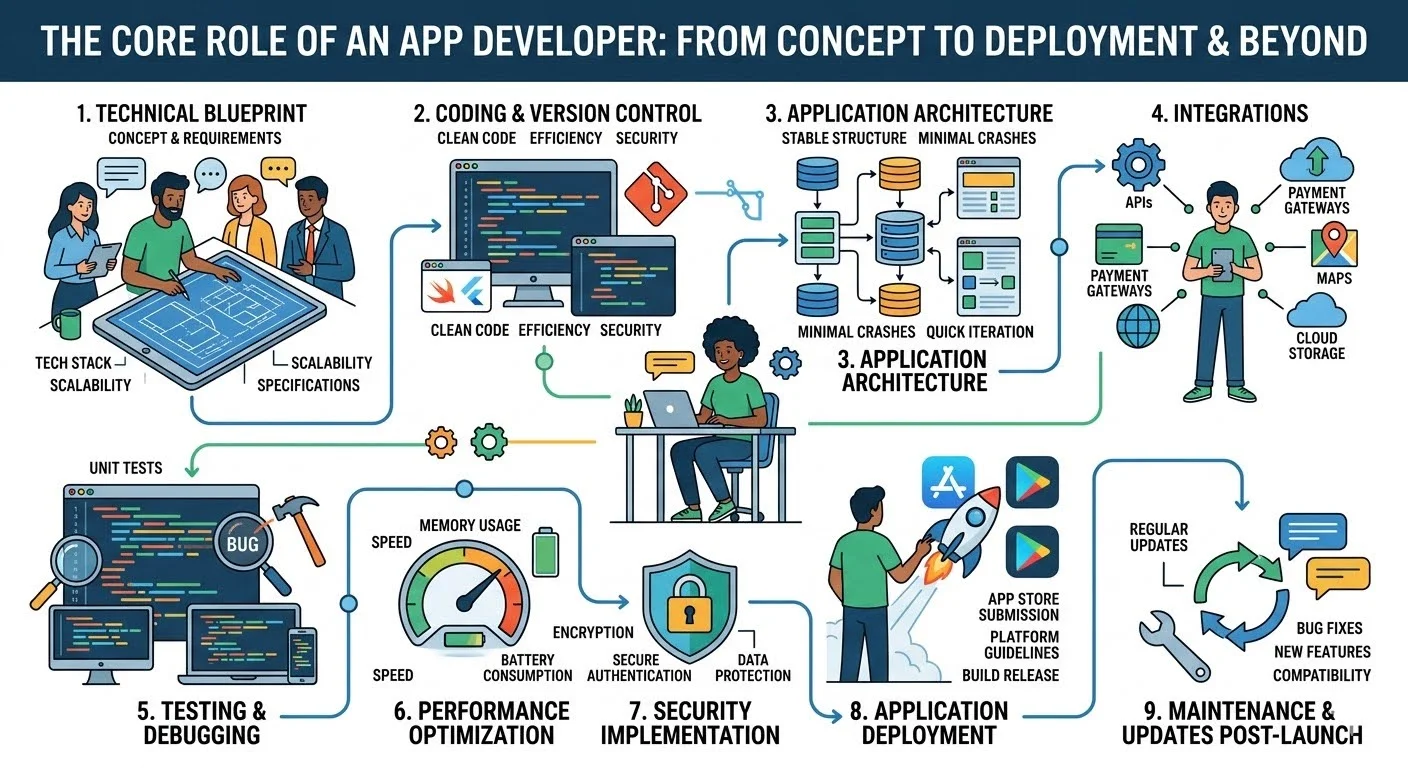
At its core, app development revolves around problem-solving. Businesses have concepts but require specialists to actualize those visions. This is where developers come into play.
Have you ever thought to yourself, “What really goes on behind the curtain when an app gets built?” Well, here are the roles a mobile app developer plays to build an app.
1. From Concept to Technical Blueprint
Every application starts as a concept. Developers work with business stakeholders to discuss objectives, target users, and necessary functionalities. They transform business needs into technical specifications.
They determine the tech stack needed for development. They decide whether the application will be built natively or using cross-platform tools.
And also, how it will accommodate future growth. Proper planning at this stage helps avoid many potential technical challenges later on.
2. Coding and Version Control
Coding comprises a significant portion of the work involved in this profession.
Developers typically use Swift, Kotlin, or Java programming languages when building apps. They also use Flutter or React Native frameworks to build them.
Writing clean code not only makes an application run efficiently but also ensures security against vulnerabilities within the codebase itself.
This reduces bugs in production. It happens by better performance optimization techniques embedded within high-quality coding practices.
3. Architecture of the Application
The architecture of an application is the internal structure of the application. This is the blueprint. This defines how different components interact and communicate with each other.
A well-defined architecture allows for scalability, quick iteration, and minimal crashes. Without proper internal structure, applications become increasingly unstable as time goes on.
4. Integration of APIs and Third-Party Services
Most applications will need to interface with external systems. This can be payment gateways, maps, chat services, or cloud storage.
Developers integrate APIs to enable seamless data exchange between different systems. Proper integration ensures that functionalities are secure and up-to-date in real time.
5. Testing and Debugging
No application works perfectly from the start; it takes many iterations to get there. Developers test applications multiple times to find bugs and performance issues.
They perform unit tests, UI tests, and beta testing before release in order to ensure that users have a smooth experience.
6. Performance Optimization
Slow applications are often uninstalled quickly by users. Developers optimize their applications for speed, memory usage, and battery consumption.
They will work on load times as well as app stability to reduce crashes. Performance is a key factor in user retention rates for an application.
7. Security Implementation
Security is important for modern applications. It must be taken into consideration during development from the start.
Developers implement encryption protocols, secure authentication methods, and data protection measures.
They adhere to industry standards for user data protection. Trust can be built while also avoiding legal issues related to non-compliance with regulations that way.
8. Application Deployment
After development comes deployment; this is where the fun really begins. Developers prepare their apps for submission.
They submit to the App Store or Google Play Store, depending on what type of device they are targeting.
They follow platform-specific guidelines carefully while submitting. Builds until everything looks good enough that no further compliance issues arise.
9. Maintenance & Updates Post-Launch
Development does not stop at launch. It continues later with regular updates, or fixing bugs.
It can also include adding requested features from users waiting eagerly for improvements.
Ongoing maintenance ensures compatibility with newer devices or operating systems released within this ever-evolving tech world.
8 Important Skills Required for Mobile App Development
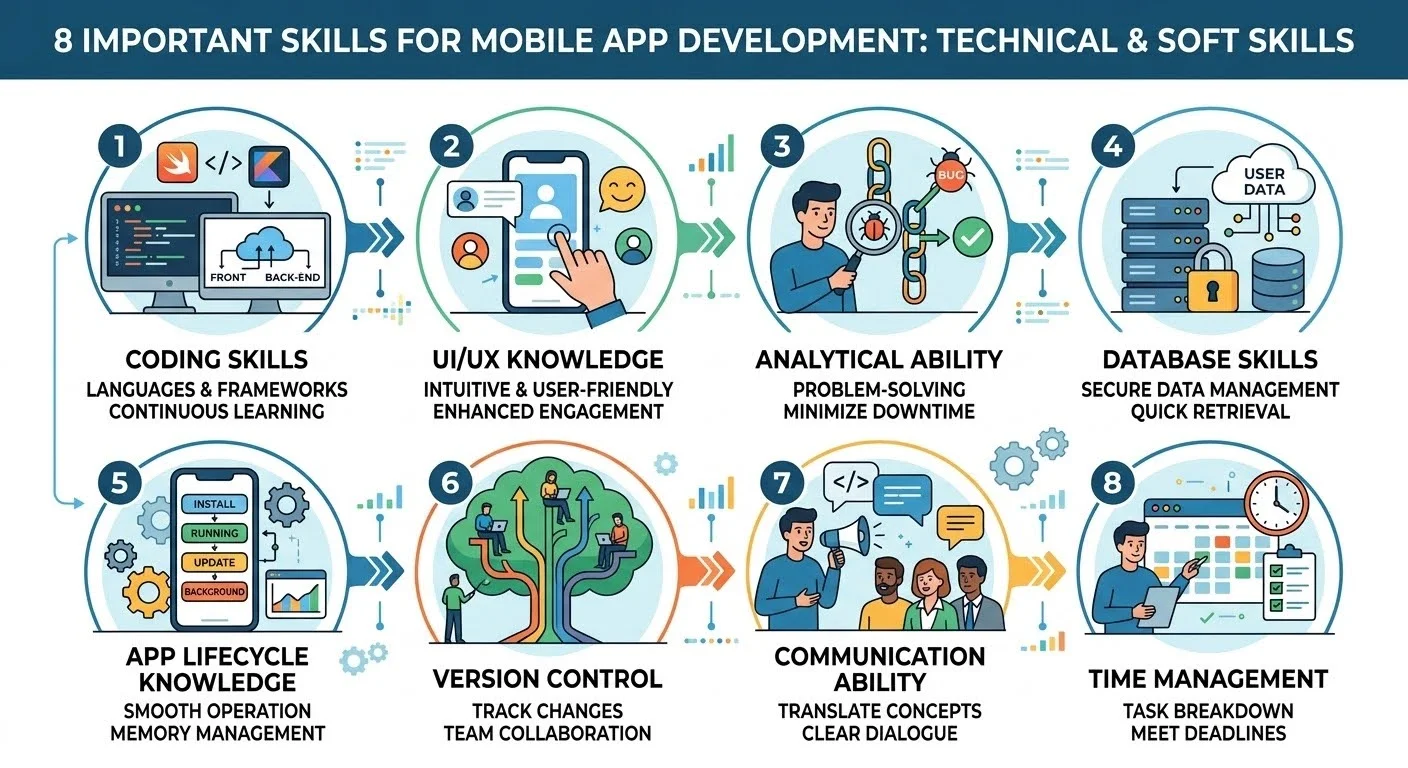
Achieving success in this domain necessitates possessing both technical expertise alongside soft skills as a mobile app developer. Coding proficiency alone won’t suffice. Have you ever pondered upon
“What abilities does a developer truly require in order to construct prosperous applications?” Here lies the answer:
1. Coding Skills
A solid grasp of coding languages and frameworks forms the bedrock of application development. Developers must know how the front end and back end integrate and interact.
They should also be familiar with the latest tools, SDKs, and platform changes. Technology is always moving forward, so continuous learning keeps them up-to-date.
2. UI/UX Knowledge
Applications should be intuitive, clean, and user-friendly. Developers collaborate closely with designers to ensure that navigation feels seamless and intuitive.
Knowing how users think helps enhance engagement and retention. When users enjoy their experience, they are more likely to stick around and come back.
3. Analytical Ability
Every project comes with its own set of technical issues and logical puzzles. Bugs, crashes, compatibility problems, and performance issues need thorough analysis. Fast and smart problem-solving minimizes downtime and annoyance; companies save money when problems are sorted out quickly.
4. Database Skills
Applications often store valuable information, like user profiles, settings, or transaction logs that need to be managed well and securely. Developers must look after databases carefully so they can get data quickly without slowing down the app itself. Having a good structure in place also helps avoid loss of data or security threats.
5. App Lifecycle Knowledge
Knowing what happens with an app during install, updates, or while running in the background is key for developers. Especially those who need to handle memory management properly as well as system resources for smooth operation across various devices/OS versions. Good lifecycle management helps avoid crashes and lag.
6. Version Control
Tools like Git track code changes over time. Version control systems allow teams to work together without stepping on each other’s toes. It also makes it easy to go back if something breaks by rolling back to an earlier version. This keeps teamwork safer and more organized.
7. Communication Ability
Clear communication among clients, designers, and project managers is very important for developers. Especially for those who need to translate technical concepts into plain language. Miscommunication frequently causes delays or mix-ups. Good communication keeps everything on track toward business objectives.
8. Time Management
Deadlines are a necessary evil in the world of business. Developers should always break their work into smaller, more manageable tasks. Proper planning will help them avoid last-minute craziness and errors. Effective time management guarantees that projects will be completed on time.
Different Kinds of Mobile Applications Mobile App Developers Create

Not all apps are created equal. The method of development varies according to the objectives of the business and the needs of its users. Have you ever thought to yourself, “What types of applications do businesses typically develop?” Here is a quick rundown:
Types of Mobile Apps Based on Development Approach
1. Native Applications
Native apps are developed exclusively for either Android or iOS platforms. Which means they provide high performance and complete integration with the device’s features.
Such applications are best suited for very demanding applications. They require high speed and excellent performance. Because they offer a better overall user experience.
2. Cross-Platform Applications
Cross-platform apps are built using a single codebase that works across multiple platforms. It allows for reduced development time and cost. Companies often choose this option when they want to get their product to market quickly and find it easier to maintain in the long run.
3. Hybrid Applications
Hybrid apps use web technologies wrapped in mobile app frameworks, running inside a container on the device as a native app.
These apps are more economical and faster to develop. But might not deliver smooth performance compared to fully native applications.
Types of Mobile Apps Based on Use Case
1. E-commerce Applications
Businesses use e-commerce apps to sell products and services online through mobile devices. These applications must have integrated payment systems, product listings, shopping carts, and user authentication features. This ensures security, speed, and ease of use.
After all, nobody wants to struggle with an app while trying to make a purchase. A seamless checkout process enhances customer satisfaction rates significantly.
Examples: Amazon, eBay, Daraz, Shopify, Alibaba.
2. On-Demand Applications
Ride-sharing, delivery service, or anything that requires booking an immediate service falls under this category. Expect real-time tracking features along with instant notifications.
Location services integration is critical here too. Performance matters because if your food delivery app crashes.
Examples: Uber, Lyft, DoorDash, Uber Eats, Pathao.
3. Enterprise Applications
Companies utilize enterprise apps for internal communication and operations management. They aim at increasing productivity while streamlining business processes. Hence, security becomes paramount in these types of applications.
Examples: Slack, Microsoft Teams, Salesforce, SAP, Trello
4. Social Networking Apps
These applications aim primarily at bringing users together. It also enables them to communicate with one another and share content. They need an efficient backend infrastructure and data management capabilities.
High user engagement and scalability are major concerns for these applications. This needs to support a large number of concurrent activities by their users.
Examples: Facebook, Instagram, LinkedIn, TikTok, Snapchat
5. Healthcare Apps
Healthcare applications support telemedicine, appointment scheduling, and health monitoring. They may work with sensitive patient information. Security, compliance, and data privacy are critical. While accuracy and dependability cannot be compromised.
6. Finance / FinTech Applications
Mobile banking, digital wallets, stock trading, and budgeting apps fall into this category.
These apps require strong security systems, encryption, and regulatory compliance because they handle sensitive financial data.
Examples: banking apps, payment wallets, investment apps.
7. Educational Applications
Education apps support online learning, skill development, and virtual classrooms. They often include video lectures, quizzes, progress tracking, and interactive learning tools.
Examples: language learning apps, online course platforms, tutoring apps.
8. Gaming Applications
Mobile games are one of the largest segments in the app market. These apps require high performance, engaging graphics, and smooth user interaction.
Examples: casual games, multiplayer games, strategy games.
Existing Relevant Contents:
How long does it take to develop a mobile app? – Realistic Time Guideline
How Much Does It Cost To Develop An App? – Complete 2026 Guide
How Mobile App Developers Build an App (Step-by-Step)
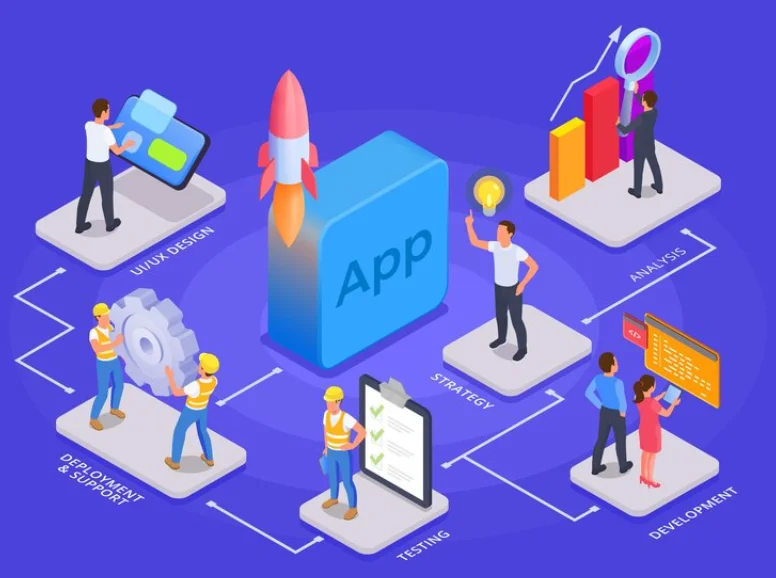
The mobile app development process is typically broken down into several distinct phases. If any of these phases are skipped or inadequately completed, it can lead to confusion. Which later on in the project and result in costly mistakes down the line.
If you’ve ever asked yourself the question “What are the stages of building a mobile app?” Then read on for the answer below:
1. Requirement Analysis
The first step is to learn about the client’s business needs and the application users’ needs. Developers collect as much detailed information as possible before writing any code.
Clear requirements help avoid misunderstandings later on in the project. This phase lays down the groundwork for all subsequent phases of the project.
2. Market Research
Basically researching competitors helps identify strengths and weaknesses in an existing market. So that their opportunities can be seized by new entrants into that market. This can happen through differentiation features defined during this phase.
It also helps establish user expectations, trends in usage patterns over time, and so on. This leads toward defining differentiating features from competitors’ offerings within this same space. Good research results in good decisions.
3. Wireframing and Prototyping
Wireframes provide a basic layout structure. Like, for what goes where within an application without getting into specifics yet about design elements. The design elements like colour, font and so on.
They basically serve as blueprints. Blueprints for how screens will flow from one another along with navigation paths between them. Think of it like planning out traffic flow in a city before construction begins.
Prototypes give stakeholders something interactive they can play around with. Even if it’s not fully fleshed out yet. It allows them to see how everything will work together at a high level before actual development starts.
4. UI/UX Design
Designers work on visual elements like buttons/icons/layouts. And developers make sure everything works properly when put into practice. This means checking alignment between front-end designs and back-end functionality among many other things is necessary.
Because in simple words, good design and alignment means better usability. Better usability ensures higher engagement. And more engagement means more satisfied users. And more satisfied users are the happier clients.
5. Development
Once approved designs come through, coding can commence. Developers create both client-facing interfaces (front end) and server-side logic that supports those interfaces (back end).
They ensure all parts talk nicely togeth,er such that everything works harmoniously. And turning abstract ideas into concrete functionalities.
6. Testing
Testing is important to ensure quality control as it happens before the launch. Developers need to check for bugs, crashes, and compatibility issues. Multiple rounds of testing improve reliability. And a well-tested app reduces negative reviews from users.
7. Deployment
The app gets submitted to the app stores for a public release. Developers follow the platform guidelines closely. Proper documentation and compliance checks are done, which ensures smooth approval.
8. Maintenance
Updates are continually made in order to improve performance and security. Feedback from users helps in refining features. Maintenance also ensures that the app remains compatible with new devices and operating systems over time. Long-term support guarantees lasting success.
How App-Concept Helps Businesses Build Powerful Mobile Applications
By now, you likely understand what goes into building a successful mobile application. You know how much work a mobile app developer has to do to build the perfect app.
Turning an idea into a fully functional, high-performing app is not always easy. Businesses often need experienced professionals who can manage technical complexity. While also keeping user experience and performance in mind.
This is where App-Concept can make a difference. App-Concept is a professional app development agency. It helps businesses design, develop, and launch powerful mobile and web applications. The team works closely with clients to transform ideas into scalable digital products that are user-friendly and reliable.
The range of services it offers throughout the entire development journey is what makes App-Concept better. From early planning to final deployment, the team focuses on building apps that meet modern user expectations and business goals.
With App-Concept, businesses can benefit from services such as:
- Custom mobile app development
- Cross-platform and native app development
- UI/UX design focused on user experience
- Backend and API integration
- Performance optimization and security implementation
- App testing and quality assurance
- App store deployment support
- Post-launch maintenance and updates
If you want to build a reliable digital product and bring your app idea to life, App-Concept is here for you. Working with a professional development team can make the process smoother and more efficient.
So, if you are looking for a mobile developer with expertise or simply want to build the best possible mobile app, contact App-Concept now!
Frequently Asked Questions
How long does it take to build a mobile application?
The timeline is based on features and complexity. Simple apps may take a few months while complex ones will definitely take longer. Planning and clear requirements would speed up the process.
Is coding the only job involved in app development?
No, design, testing, strategy, and maintenance are just as important. Development is teamwork.
What is the difference between Android and iOS development?
Android usually uses Kotlin or Java whereas iOS uses Swift. Also platform guidelines differ as well as testing environments.
Can one developer build a complete app alone?
It can be done for small projects but large ones need a team. Collaboration helps quality.
How much does it cost to build an app?
Costs depend on features and complexity. Custom enterprise apps will cost more than simple applications.
Conclusion
Knowing what mobile app developers do helps businesses make better choices because they do more than just write code. They plan, build, test, secure, and improve an application for long-term success.
To get good results from an experienced team, like App-Concept working with you can really change things for the better. Because your idea of an app can become profitable with the right support from the professional App-Concept team.